Travel money
Travel money in Vietnam: cash or card?
Cash, and more of it than you expect: the dong runs everything below a hotel counter, cards start at mid-range hotels and malls, and the QR code every Vietnamese pays with needs a local bank account that a tourist visa cannot get you.
Vietnamese dong (VND, ₫) · figures checked against the sources at the foot of this page
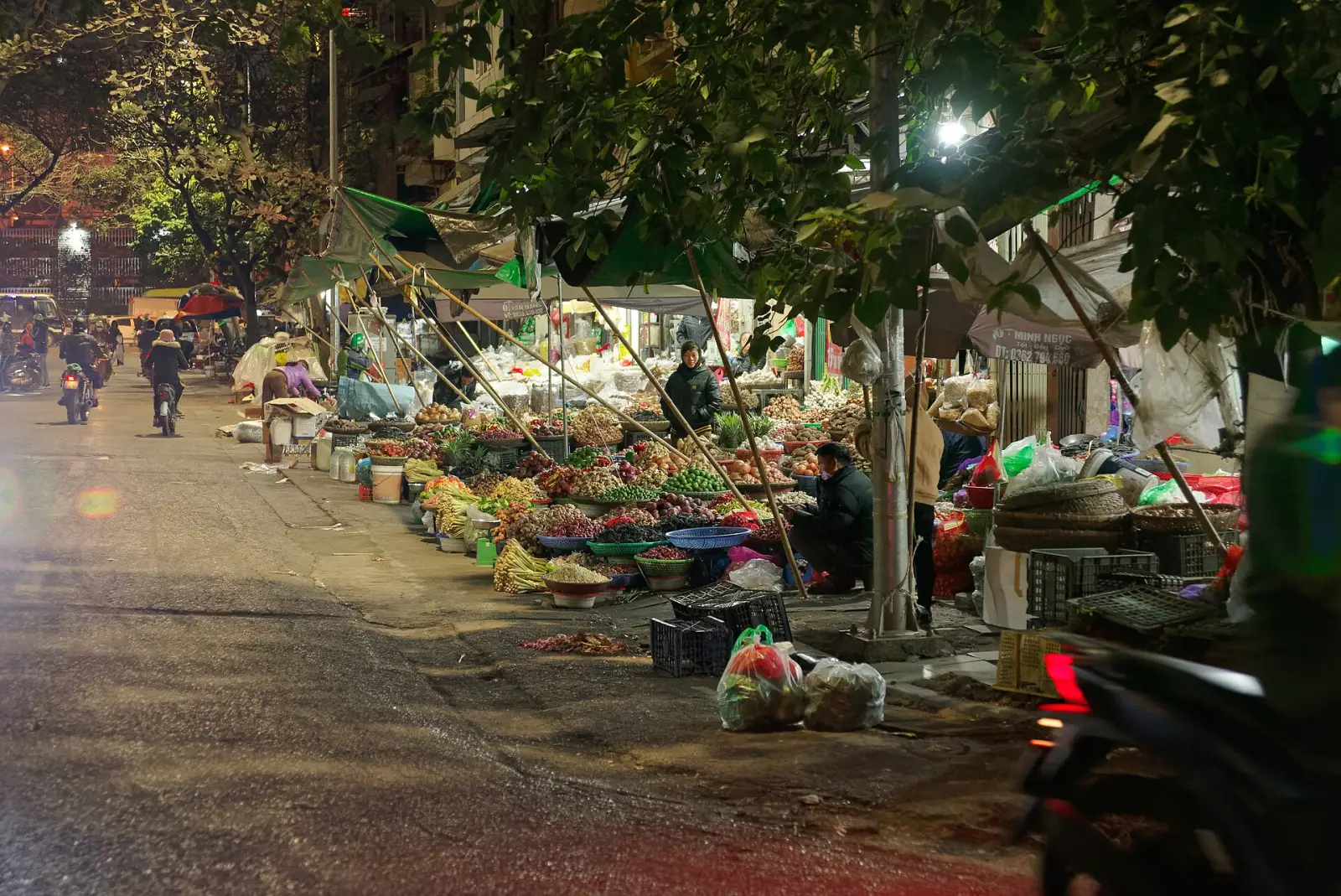
Street food, markets, cafés, buses, homestays, motorbike hire, temples — nearly everything that is not a hotel or a mall.
Mid-range hotels upward, malls, supermarkets, chain restaurants, tour agencies and airlines. Often with 2–3% added.
A float in 50k, 100k and 200k notes. Break the 500k the ATM hands you at a supermarket before you need it.
The ATM: a fixed fee of roughly 22,000–66,000 ₫ against a cap that is often only 2–3 million ₫ a go.
The money itself
- 10,000 ₫Yellow-brown
- 20,000 ₫Pale blue
- 50,000 ₫Pink-brown
- 100,000 ₫Green
- 200,000 ₫Red-brown
- 500,000 ₫Blue-green
There are none in practice. Coins were issued in the 2000s and abandoned by 2011, so nothing jingles here — small change is paper: 1,000, 2,000 and 5,000 ₫ notes, soft and often close to falling apart.
The six polymer notes are the same size and feel, and the 20,000 and the 500,000 are both blue — a twenty-five-fold mistake that visitors make constantly and that a tired vendor at midnight will not always correct. Count the zeros rather than reading the colour, and look at what you are handed as change, not just what you hand over. ATMs pay in 500,000 notes, which nobody selling phở wants to see.
Every way to pay, and whether it works for a visitor
Whether a payment method exists in Vietnam and whether you can use it are different questions. This table answers the second one: no local bank account, no local SIM, no residency.
Cash (dong)
WorksAccepted everywhere without exception, and the only thing that works at a market stall, a xe ôm, a sleeper bus, a rural homestay or a plastic-stool restaurant. This is the default, not the backup.
Visa / Mastercard
Works, with a catchReliable from three-star hotels upward, in malls, supermarkets, chain restaurants, tour agencies and airline offices, and increasingly in city cafés. Below that it thins out fast, and plenty of businesses that do take cards pass the processing fee to you.
2–3% surcharge is common
Apple Pay / Google Pay
WorksYour own card, so it works at any contactless terminal — including the gates on Ho Chi Minh City's metro. It does not get you into the QR economy, which is where most Vietnamese money actually moves.
VietQR / bank QR
Residents onlyThe QR code on every counter, cart and windscreen in the country. Paying with it means a Vietnamese bank account, and a tourist visa will not get you one — banks want a long-term visa or a residence card.
Your home bank app or wallet, via the QR
Depends where you're fromNAPAS has opened VietQR to some foreign apps: visitors from Thailand, Laos and Cambodia can scan with their own banking apps, and Chinese (Alipay, UnionPay) and Korean (GLN, Naver Pay) apps are supported at participating merchants. Coverage is merchant-by-merchant rather than universal, and if you are from anywhere else it does not apply.
MoMo / ZaloPay / VNPay
Residents onlyThe wallets Vietnamese use for everything. Registration is built around a Vietnamese phone number, and raising the account above the basic tier needs a Vietnamese ID card. Not a plan for a two-week trip.
JCB / UnionPay / American Express
Works, with a catchTurn up at hotels, larger restaurants and some ATMs, and disappear below that. Bring a Visa or Mastercard as the card you actually rely on.
Grab / Be / Xanh SM
WorksAll three take a foreign card in the app, for cars and motorbikes alike, and all three let you hand the driver cash instead. Fares are fixed in the app, which quietly solves the haggling problem for anyone who dislikes it.
US dollars
Works, with a catchSome hotels and tour operators still quote in dollars, and a few will take them. Pricing and paying in foreign currency is outside the rules here, the rate applied is theirs rather than the market's, and change comes back in dong anyway. Convert and pay in dong.
Cash
Vietnam is the most cash-first country covered here, and the gap between what the country pays with and what a visitor can pay with is the whole story. Domestic payment is overwhelmingly digital — the QR code is on every stall — but that system is closed to anyone without a Vietnamese bank account, so a tourist ends up using the one method that never asks who you are.
Budget your notes rather than your total. The workable float is 50,000, 100,000 and 200,000 notes; 500,000 notes are what machines dispense and what small businesses cannot change. A supermarket, a chain café or a fuel station will break one without blinking, and doing that early costs nothing.
Prices in markets and from street vendors are often negotiable and sometimes quoted higher to foreigners. That is a haggling question rather than a payment one, but it interacts with cash: agreeing the number before you buy, and having something close to the right notes, removes most of the friction.
Cards
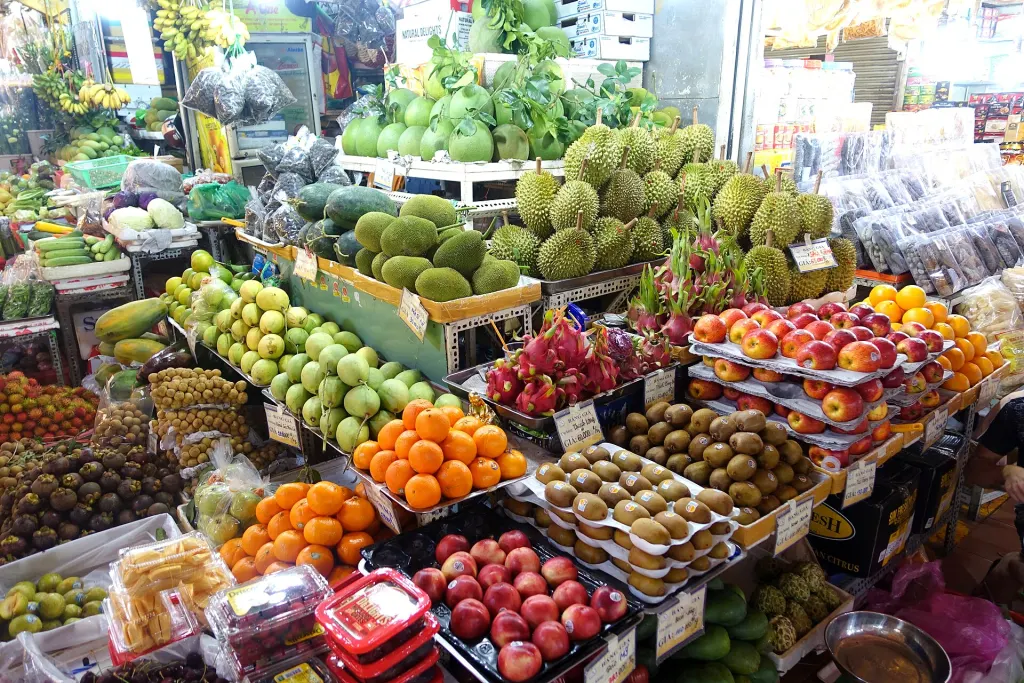
Card acceptance tracks the formality of the business almost perfectly. Hotels from three stars up, malls, supermarkets, chain restaurants, tour agencies, airlines and city cafés take Visa and Mastercard, contactless included. Family restaurants, markets, buses, most homestays and anything rural do not.
Where cards are taken, a 2–3% surcharge is common and usually mentioned at the till rather than on the menu. It is worth asking before a large payment — a tour, a multi-night stay, a motorbike deposit — because that is where the percentage turns into real money and where cash is often welcomed with a discount.
Decline any offer to charge you in your home currency. A terminal or ATM that shows the total in pounds, euros or dollars is running dynamic currency conversion, and the rate comes from the merchant's processor rather than your card network. Pay in dong and let your own bank convert.
ATMs
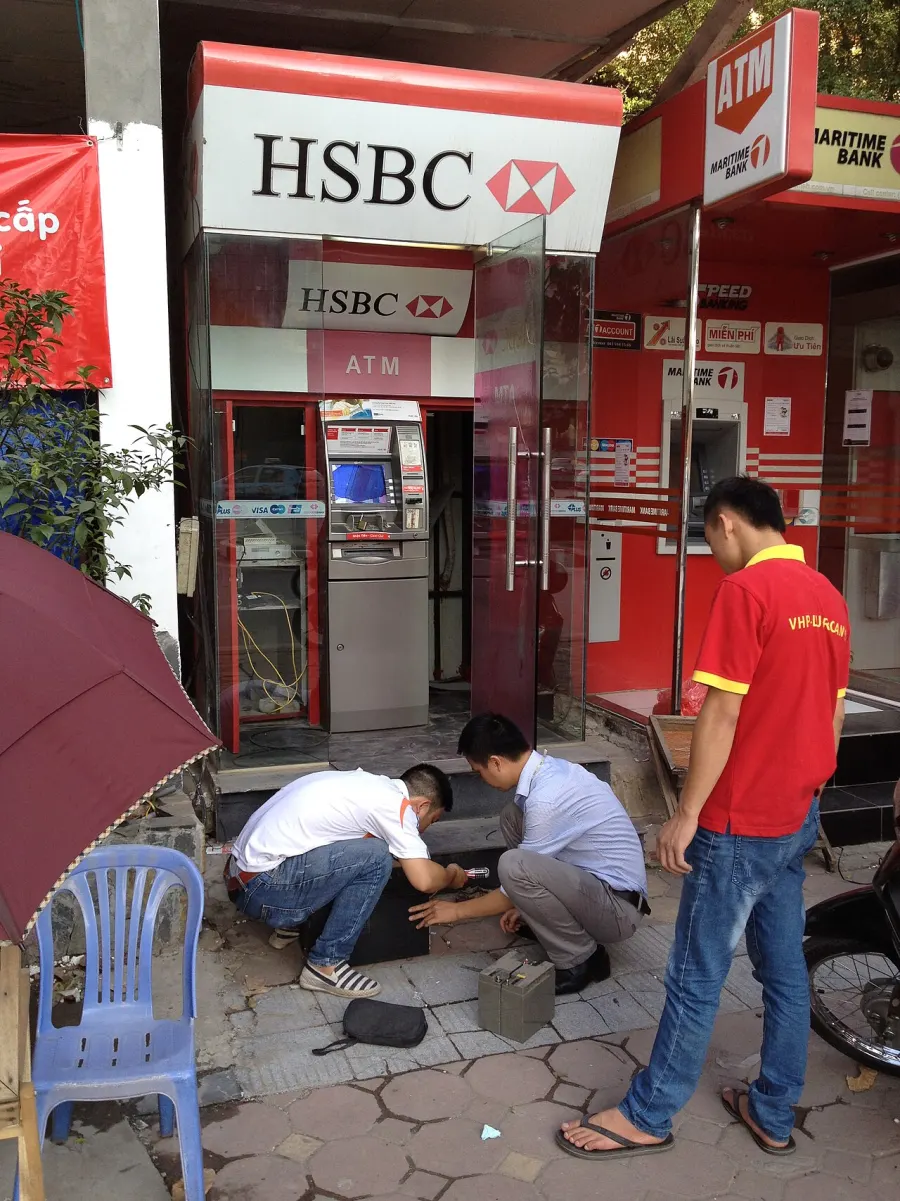
Vietnamese ATMs are unusually expensive for foreign cards, and the reason is the combination rather than the fee alone. Most banks charge a fixed amount per withdrawal — commonly in the 22,000–66,000 ₫ range, with at least one bank having switched to a percentage — while capping each withdrawal at 2 to 3 million dong. A fixed fee against a low ceiling is a high fee per unit of cash, and no amount of planning gets around it if the machine will not give you more.
So the tactic that works elsewhere — take out a lot, rarely — only half works here. Look for the banks with the higher per-transaction limits, take the maximum the machine allows, and treat the fee as the price of the trip rather than of the withdrawal. Fee levels and free-withdrawal deals change often enough that the screen in front of you is the only reliable source.
Machines are on nearly every city block and inside every mall, and they run out at Tết and on long weekends. Withdraw before a public holiday and before heading anywhere rural, and decline the on-screen conversion offer every time.
Changing money
The advice you will read almost everywhere — change money at a gold shop, the rate is better than the bank — stopped being safe advice on 9 February 2026. Exchanging outside a licensed agent is now a penalised act for the customer as well as the shop: a warning below USD 1,000, and fines starting at 10 million ₫ above it. Shops in tourist districts have been closed for it.
What is left is banks and counters displaying the licensed-agent sign, đại lý thu đổi ngoại tệ. Bring your passport, bring clean unmarked notes, and expect the rate to be posted rather than negotiated. Bank branches keep office hours and close for lunch, which is worth knowing before you land late.
Going the other way is the hard direction. Licensed agents buy foreign currency from you; they do not sell it back, so leftover dong is not easily turned into dollars or euros on your way out. The dong is also difficult to buy at a sensible rate before you travel. Arrive with a card and some hard currency, convert as you go, and plan to spend down what is left rather than carrying it home.
Costs that are not the price
Service charge, then VAT
Hotels and upmarket restaurants add 5–10% service charge, with VAT on top. VAT is 8% on most goods and services until 31 December 2026, temporarily cut from the standard 10% — so a bill can carry two additions that were never on the menu price.
Tipping is optional and not automatic
Nothing is expected at street stalls, local restaurants or cafés, and rounding up is plenty for a taxi. Where tipping has taken hold is guides and drivers on multi-day tours, hotel porters and housekeeping in mid-range and luxury hotels. Tip in dong, in cash, handed over directly.
The card surcharge
2–3% for paying by card is normal and usually mentioned only when you produce the card. On a tour or a week's accommodation it is the single easiest cost to remove, by asking first and paying cash.
You can claim VAT back on goods
Spend at least 2,000,000 ₫ in one shop in one day, at a store in the refund scheme, and keep the invoice and form. You reclaim 85% of the VAT paid — around 6.8% of the price after the counter's cut — at an international airport or seaport on the way out. Goods must be bought within 60 days of departure, and your stay must be under 183 days in the year.
Paying for transport
Ho Chi Minh City's metro takes your card
Line 1 accepts contactless Visa, Mastercard and JCB at the gates, so a foreign card or a phone works without any local set-up. There is also the HURC app with QR tickets and a stored-value card, but neither is necessary for a visitor.
Hanoi's metro is app-and-counter first
Both lines moved to cashless gates during 2026, with QR tickets in the Hanoi Metro app, Visa cards and phone wallets among the accepted methods, and biometric ID gates aimed at residents. The ticket counter still exists and still takes cash, which is the fallback that always works.
Buses, taxis and motorbikes
City buses are cash apart from a handful of contactless routes in Ho Chi Minh City — have small notes, since a conductor cannot change a 500,000. Grab, Be and Xanh SM take a card in the app or cash to the driver. Street taxis and xe ôm are cash, with the fare agreed first unless the meter is running.
What you may carry in and out
Declaring cash, in either direction
Anything over USD 5,000 or equivalent in foreign banknotes, or over 15,000,000 ₫ in dong, must be declared to customs when entering or leaving, under the State Bank's Circular 15/2011/TT-NHNN. The dong figure is the one that catches people: it is a low bar, and unspent cash on the way out counts.
The dong does not travel
It is a closed currency in practice — hard to buy abroad at a fair rate and hard to convert back once you have left. Treat the cash you withdraw as money to be spent in the country rather than a float you can unwind later.
Common questions about money in Vietnam
Can tourists use VietQR or QR payments in Vietnam?
Not with a Vietnamese account — VietQR is tied to a Vietnamese bank account, and banks require a long-term visa or residence card, which a tourist visa is not. NAPAS has opened cross-border scanning to some foreign apps, so visitors from Thailand, Laos and Cambodia, and users of Alipay, UnionPay, GLN and Naver Pay, can pay at participating merchants. Everyone else uses cash or a card.
Can I still exchange money at gold shops in Vietnam?
No. Since 9 February 2026, exchanging currency anywhere other than a bank or a licensed exchange agent is a penalised act, and the penalty falls on the customer as well as the shop: a warning below USD 1,000, and fines from 10 million ₫ above that. Older guides still recommend gold shops; they are describing the rules that applied before this year.
How much is the ATM fee in Vietnam?
Most Vietnamese banks charge a fixed fee in the region of 22,000–66,000 ₫ for a foreign-card withdrawal, on top of anything your own bank charges, and at least one has moved to a percentage instead. What makes it expensive is the pairing with a per-transaction cap of about 2–3 million ₫, so the fee lands against a small amount of cash. The exact figure appears on screen before you confirm.
Can I pay by card in Vietnam?
In mid-range and better hotels, malls, supermarkets, chain restaurants, tour agencies and city cafés, yes. Street food, markets, buses, homestays and rural businesses are cash. Where cards are taken, expect a 2–3% surcharge often enough that it is worth asking before a large bill.
Should I bring US dollars to Vietnam?
Bring some as a reserve to change at a bank or licensed counter, not as a way to pay. Pricing and paying in foreign currency is outside the rules, the businesses that accept dollars set their own rate, and your change comes back in dong regardless. Clean, unmarked notes exchange best.
In Vietnam, should I pay in dong or my own currency?
In dong, always. When a terminal or ATM offers to bill you in your home currency it is offering dynamic currency conversion, where the merchant's processor picks the exchange rate instead of Visa or Mastercard — reliably worse than the rate you would otherwise have received.
What should I do with leftover Vietnamese dong?
Spend it. Licensed exchange agents buy foreign currency rather than sell it, so converting dong back is awkward inside the country and worse outside it, where the dong trades poorly if at all. Anything over 15,000,000 ₫ in cash also has to be declared to customs on the way out.
Where these figures come from
Checked against the following on . Fees and thresholds move; where a figure varies by bank or by machine, this page gives the range rather than inventing a single number.
- VietnamPlus — new penalties for gold and foreign currency trading
- Tuổi Trẻ News — cross-border QR payments for foreign visitors
- Vietnam Law Magazine — cash declaration thresholds (Circular 15/2011/TT-NHNN)
- Vietnam Briefing — VAT refunds for departing visitors
- Nhân Dân — contactless bank cards on the Ho Chi Minh City metro
- DFDL — extension of the reduced 8% VAT rate to 31 December 2026