Travel money
Travel money in Singapore: cash or card?
Tap the card you arrived with — on the MRT gantry, in shops, everywhere. The only cash you need is for hawker stalls, and even that is shrinking.
Singapore dollar (SGD, S$) · figures checked against the sources at the foot of this page
Older hawker stalls, wet markets, some coffee shops and the odd temple donation box.
Everything else, contactless included — shops, restaurants, taxis and the MRT gantry itself.
S$20–40 in small notes and coins for hawker centres. You will spend less of it every year.
The ++ on restaurant bills: 10% service and 9% GST are added after the menu price.
The money itself
- 2 S$Purple
- 5 S$Green
- 10 S$Red
- 50 S$Blue
- 100 S$Orange
5, 10, 20 and 50 cents, then S$1. Hawker centres are where they earn their keep — a plate of chicken rice and a kopi are exactly the transactions that still like coins.
Brunei dollars circulate at par by long-standing agreement and are occasionally handed back as change. They spend in Brunei, not elsewhere, so pass them on or keep them as a souvenir rather than carrying them home.
Every way to pay, and whether it works for a visitor
Whether a payment method exists in Singapore and whether you can use it are different questions. This table answers the second one: no local bank account, no local SIM, no residency.
Visa / Mastercard
WorksAccepted essentially everywhere, contactless included and down to a couple of dollars. Terminals are fast and PIN prompts are rare.
Apple Pay / Google Pay
WorksWorks anywhere contactless does, including the MRT and bus readers. Nothing to set up locally.
Cash (Singapore dollars)
WorksAlways accepted and genuinely useful at hawker centres and wet markets, where the older stalls have never taken anything else. Elsewhere it is optional.
PayNow and the local QR
Residents onlyThe QR you see on hawker stalls and shop counters runs on PayNow, which is tied to a Singapore bank account and an NRIC or FIN. Stalls that take it usually take cash too.
American Express
WorksUnusually well accepted here compared with most of the region — hotels, malls, restaurants and taxis. Still not a substitute for a Visa or Mastercard at the smallest end.
Cash
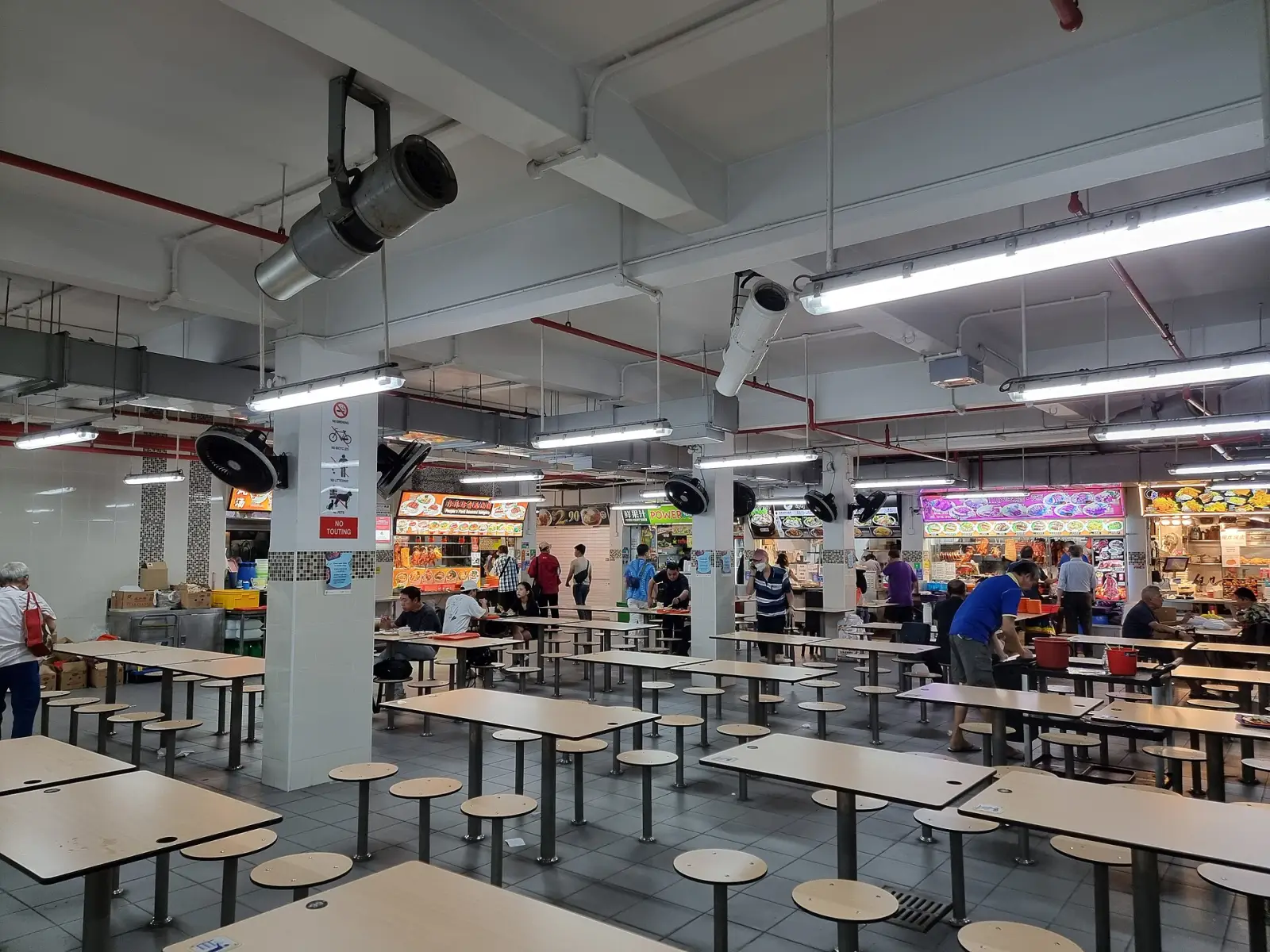
Singapore is as close to cashless as anywhere in Asia, and the exception is the one place worth eating: hawker centres. Many stalls now take PayNow or cards, but a good number of the older ones still want notes and coins, and the queue is not the moment to discover which kind you are standing in.
S$20 to S$40 in small denominations covers a few days of that. Beyond hawker centres and wet markets there is very little cash needs to do — taxis, buses, museums, shops and restaurants all take a tap.
Withdrawing is easy and cheap: bank machines are everywhere, and the local banks generally do not add a surcharge for a foreign card.
Cards
Contactless is the default, acceptance is close to universal, and small amounts are not a problem. American Express does better here than almost anywhere else in Asia, and Visa and Mastercard are accepted without thought.
The thing to read is the bottom of the menu rather than the terminal. Restaurants add a 10% service charge and then 9% GST, usually written as ++, so a listed price is about a fifth below what you pay. Hawker centres and food courts quote the final price.
Decline dynamic currency conversion if a terminal offers it. Being charged in your own currency costs several percent and buys nothing.
ATMs
DBS, OCBC and UOB machines are everywhere — in malls, MRT stations and along every high street — and generally do not levy their own charge on a foreign card. What your own bank charges is the only fee most visitors meet.
Because cards work almost everywhere, the honest answer is that most visitors need one withdrawal for the whole trip, sized for hawker food and the occasional stall.
Take Singapore dollars and decline any conversion offer.
Changing money
Singapore has genuinely competitive money changers — the clusters in Mustafa Centre, Chinatown and the Arcade at Raffles Place are a long way better than airport counters and often better than banks.
That said, a bank machine at no extra charge is simpler, and the amount of cash needed here is small enough that the difference is a few dollars rather than a reason to make a trip.
Leftover Singapore dollars change back easily; leftover Brunei dollars do not, so spend those before you fly.
Costs that are not the price
The ++ on restaurant bills
10% service charge and 9% GST are added on top of the menu price at restaurants and hotels, written as ++. Hawker centres, food courts and coffee shops quote the price you actually pay, which is part of why they feel such good value.
Tipping is not expected
The service charge covers it and tipping is not part of the culture. Rounding up a taxi fare is as far as it goes, and nothing is expected at hawker centres, bars or cafés.
You can reclaim GST on shopping
Non-residents can claim GST back on purchases of at least S$100 from a participating retailer, processed electronically at Changi before departure. Expect around 7–8% back after the operator's fee, and note that hawker stalls and small independents are not in the scheme.
Alcohol is taxed heavily
Duty makes drinking expensive by regional standards, and the duty-free allowance on arrival is small and does not apply if you have come from Malaysia. It is a budgeting fact rather than a payment one.
Paying for transport
The gantry takes your own card
Tap a contactless Visa, Mastercard or Amex — or a phone — straight at the MRT gantry and on buses, with no registration and nothing to buy. Fares are deducted per journey. Use the same card or device for the whole trip so transfers are recognised.
Taxis and ride apps
Taxis take cards and often add small surcharges by time of day and pickup point, all shown on the meter. Grab quotes a fixed fare in the app and settles by card there.
Changi and the border
Airport trains and buses take the same contactless tap. If you are crossing to Johor Bahru, note that the Malaysian side runs on different systems entirely — that is a ringgit trip, not a Singapore one.
What you may carry in and out
Declaring cash
More than S$20,000 or the equivalent in cash and bearer instruments has to be declared when entering or leaving Singapore.
No cash payment cap
There is no general limit on paying in cash, though large cash transactions attract reporting obligations on the business's side.
Common questions about money in Singapore
Do I need cash in Singapore?
Only a little, and mainly for hawker centres. Cards and phones cover shops, restaurants, taxis and public transport, but a number of older hawker stalls and wet-market sellers still take cash only. S$20–40 in small notes and coins is enough for a few days.
Can I tap my own bank card on the MRT?
Yes. Contactless Visa, Mastercard and Amex cards and phone wallets work directly at the gantry and on buses with no registration and no ticket to buy. Use the same card or device throughout so transfers are recognised.
What does ++ mean on a Singapore menu?
A 10% service charge and 9% GST added on top of the listed price — roughly a fifth more than the menu says. Hawker centres and food courts quote the final price instead, which is why the same meal feels so much cheaper there.
Can tourists use PayNow?
No. PayNow needs a Singapore bank account tied to an NRIC or FIN. It is what locals scan at hawker stalls and shops, and everywhere that takes it also takes cash or cards.
Are there ATM fees in Singapore?
Not usually from the Singapore side — DBS, OCBC and UOB machines generally do not surcharge foreign cards. Your own bank's fees still apply, but since cards work almost everywhere, most visitors need only one withdrawal.
Can I claim GST back when leaving Singapore?
If you are a non-resident, on purchases of S$100 or more from a participating retailer. The claim is processed electronically at Changi before departure and returns roughly 7–8% after the operator's fee. Hawker stalls and small independents are not part of the scheme.
Should I tip in Singapore?
No. The service charge already sits on restaurant bills and tipping is not customary. Rounding up a taxi fare is the whole of it.
Where these figures come from
Checked against the following on . Fees and thresholds move; where a figure varies by bank or by machine, this page gives the range rather than inventing a single number.