Travel money
Travel money in Malaysia: cash or card?
The most straightforward country in the region: cards work widely, bank machines mostly do not surcharge, and DuitNow QR is open to more foreign apps than any neighbour's system. Keep cash for hawker centres and small towns.
Malaysian ringgit (MYR, RM) · figures checked against the sources at the foot of this page
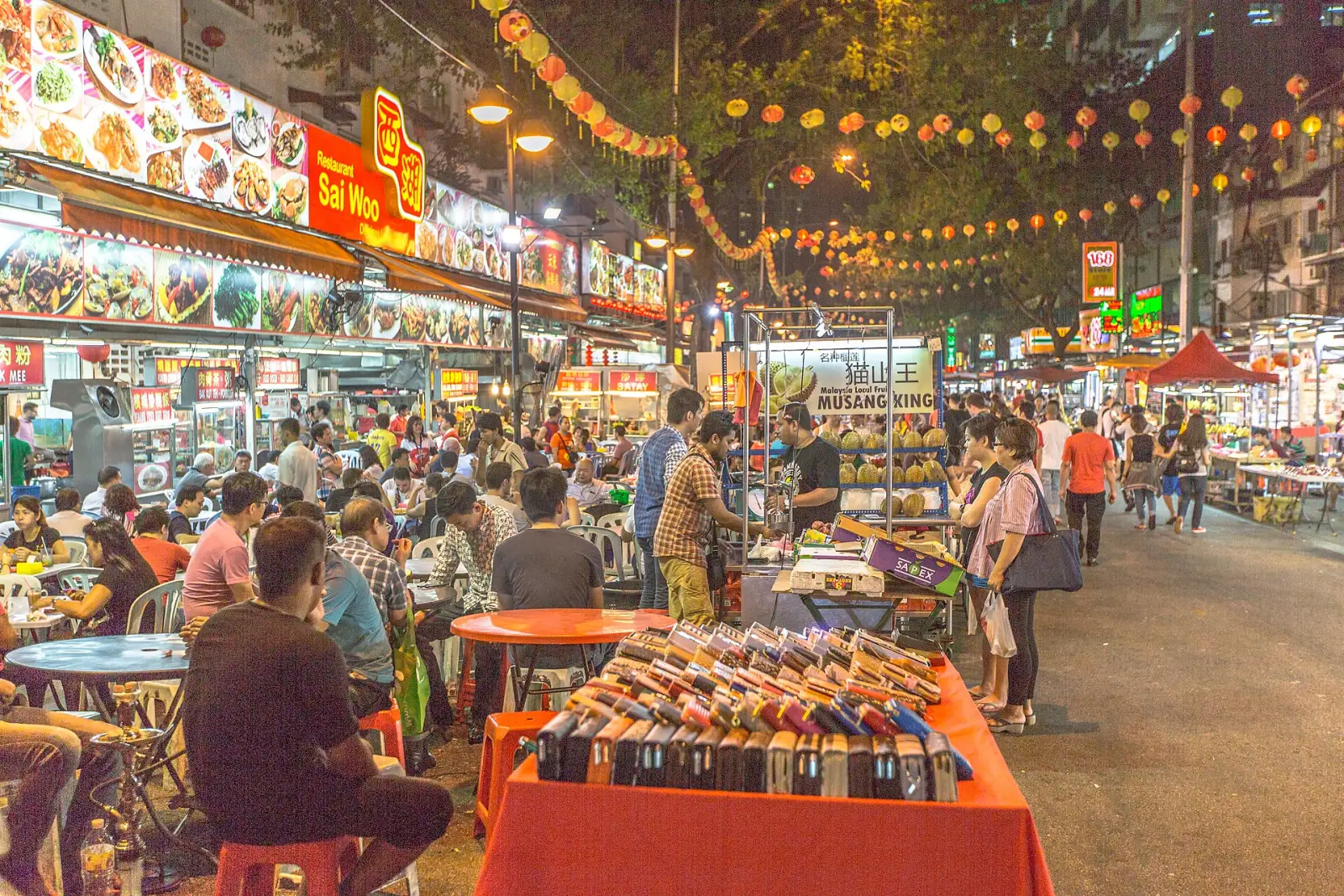
Hawker centres, night markets, kopitiams, small-town shops, and most taxis flagged in the street.
Malls, supermarkets, chains, hotels and mid-range restaurants — contactless as standard.
A modest float in ringgit. Withdrawals are cheap here, so there is no need to hoard.
The ++ on menus, and a nightly tourism tax that only foreign passport holders pay.
The money itself
- 1 RMBlue
- 5 RMGreen
- 10 RMRed
- 20 RMOrange
- 50 RMTeal
- 100 RMPurple
5, 10, 20 and 50 sen. Cash totals are rounded to the nearest 5 sen because the 1 sen coin is long gone, so the coins you actually handle are few.
The RM100 note is the largest and hawker stalls dislike it as much as anywhere else. Machines dispense RM50s and RM100s, so break one at a 7-Eleven or a supermarket before a night market rather than during it.
Every way to pay, and whether it works for a visitor
Whether a payment method exists in Malaysia and whether you can use it are different questions. This table answers the second one: no local bank account, no local SIM, no residency.
Visa / Mastercard
WorksAccepted across malls, supermarkets, chains, hotels, petrol stations and mid-range restaurants, contactless included. Acceptance thins at hawker stalls and in small towns rather than failing outright.
Cash (ringgit)
WorksAlways accepted, and the natural choice at hawker centres, night markets, kopitiams and street taxis. A modest float covers everything cards miss.
Apple Pay / Google Pay
WorksWorks anywhere contactless does, which is most terminals in the cities. Nothing to register locally.
DuitNow QR, via a linked foreign app
Depends where you're fromThe pink QR on every counter is unusually open: PayNet has connected Alipay+ and its fifteen partner wallets, ASEAN bank links, and — since 2026 — India's UPI, so a great many visitors can scan with the app they already have. Whether yours is included depends entirely on where you bank.
Touch 'n Go and the local e-wallets
Residents onlyWhat Malaysians tap for tolls, parking and small purchases. Registration is built around a Malaysian number and bank account, and nothing a visitor needs requires one.
American Express
Works, with a catchHotels, department stores and larger chains. Below that, unreliable. Carry a Visa or Mastercard as the working card.
Cash
Malaysia sits comfortably between its neighbours: more card-friendly than Indonesia, less cashless than Singapore. In Kuala Lumpur, Penang or Johor you can spend most of a day on a card, and the exceptions are predictable — the hawker centre, the night market, the kopitiam, the taxi you waved down.
Those exceptions are where the food is, which makes a small cash float essential rather than optional. RM100 or so in small notes covers a day of eating well.
Topping up is cheap, unusually for the region: the major bank machines generally do not add their own charge for a foreign card, so there is no reason to carry a week's cash at once.
Cards
Card acceptance is broad and contactless is normal, including for small amounts in the cities. Terminals are modern and PIN prompts are quick.
Surcharging is not the routine irritation it is in Indonesia or Thailand, though a small business may still ask for cash below a few ringgit. Where a card is taken, the price is the price.
Decline dynamic currency conversion wherever it appears — at a till, at a hotel checkout or at a machine. Being billed in your own currency hands the rate to the merchant's processor rather than your bank.
ATMs
Maybank, CIMB and Public Bank machines are everywhere and generally do not levy their own fee on a foreign card, which makes Malaysia one of the cheaper countries in Asia to withdraw in. What your own bank charges is the part to check before you travel.
Machines inside bank branches, malls and 7-Elevens are plentiful in the cities and thin out on the islands and in the interior — Perhentian and Tioman in particular are worth arriving at with cash rather than expecting a machine to be working.
Take ringgit, decline any conversion offer, and ask for smaller denominations where the machine gives you the choice.
Changing money
Licensed money changers in the malls and city centres are competitive and quick, and generally beat both banks and airport counters. Look for the licensed-changer signage rather than a rate scrawled on a board.
Rates for major currencies are close enough between reputable changers that walking a further block is rarely worth it. Bring clean notes and your passport, which some changers ask to see.
Ringgit is worth spending down before you leave — it has limited value abroad — but there is no urgency, since withdrawing more is cheap if you run short.
Costs that are not the price
The ++ on the menu
Formal restaurants and hotels add a 10% service charge and service tax on top of the listed price, written as ++. Together that is roughly a fifth more than the menu says. Hawker centres, kopitiams and street food quote the price you actually pay.
The tourism tax only foreigners pay
Accommodation charges RM10 per room per night to foreign passport holders — Malaysians and permanent residents are exempt. It is collected at the property or by the booking platform, and it is per room rather than per person.
Tipping is not customary
Where the service charge is already on the bill, nothing more is expected. Elsewhere, rounding up is plenty; nobody depends on tips, and leaving nothing is unremarkable.
Tolls, parking and the local wallet
If you rent a car, tolls are cashless and run on Touch 'n Go — the rental company supplies a card, and topping it up is a cash-at-the-counter errand rather than something a visitor's phone can do.
Paying for transport
Kuala Lumpur takes a bank card at the gate
The MRT, LRT and Monorail accept contactless bank cards and phone wallets directly at the barrier, so there is no need to buy a stored-value card for a short visit. Buses run on Touch 'n Go and cash.
Trains, ferries and long distance
KTM's intercity trains, the ETS to Penang and Ipoh, and the ferries sell online by card. Booking the ETS ahead matters at weekends and holidays; the walk-up option often does not exist.
Taxis and ride apps
Grab is the default and quotes the fare in advance, paid by card in the app or cash to the driver. A street taxi is cash, and agreeing to use the meter before setting off is worth doing.
What you may carry in and out
Declaring cash
More than the equivalent of USD 10,000 in cash and negotiable instruments must be declared to customs when entering or leaving Malaysia.
Ringgit and the border
There are limits on how much ringgit a traveller may carry out, and the practical answer is the same as the useful one: spend it down or change it before you fly rather than carrying a pile home.
Common questions about money in Malaysia
Do I need cash in Malaysia?
Some. Cards cover malls, supermarkets, chains, hotels and mid-range restaurants, but hawker centres, night markets, kopitiams and street taxis are cash — and that is where most of the good eating happens. RM100 in small notes is a sensible day's float.
Can tourists use DuitNow QR?
Many can. PayNet has connected Alipay+ and its partner wallets, several ASEAN bank networks and India's UPI to DuitNow QR, so visitors from a growing list of countries can scan with their existing app. Whether yours works depends on where you bank — if it does not, cards and cash cover everything.
Are there ATM fees in Malaysia?
Usually not from the Malaysian side. Maybank, CIMB and Public Bank machines generally do not surcharge foreign cards, which makes withdrawing here cheaper than almost anywhere else in the region. Your own bank's fees still apply.
What does ++ mean on a Malaysian menu?
A 10% service charge and service tax added on top of the listed price — together roughly a fifth more than the number you read. It appears at formal restaurants and hotels; hawker stalls and kopitiams quote the final price.
What is the tourism tax in Malaysia?
RM10 per room per night, charged only to foreign passport holders and collected by the accommodation or the booking platform. Malaysians and permanent residents are exempt, and it is per room rather than per person.
Can I tap my bank card on the KL metro?
Yes. The MRT, LRT and Monorail take contactless bank cards and phone wallets straight at the gate, so a short visit needs no stored-value card. Buses are a different matter and want Touch 'n Go or cash.
Should I tip in Malaysia?
Not really. Formal places already add the service charge, and elsewhere rounding up is more than enough. Nobody is working for tips.
Where these figures come from
Checked against the following on . Fees and thresholds move; where a figure varies by bank or by machine, this page gives the range rather than inventing a single number.