Travel money
Travel money in Indonesia: cash or card?
Cash for most of the country, cards in Bali and the cities, and a QR system that works for you only if you arrived from one of six countries. Pay the Bali levy on the official site before you land, and count what a money changer hands back.
Indonesian rupiah (IDR, Rp) · figures checked against the sources at the foot of this page
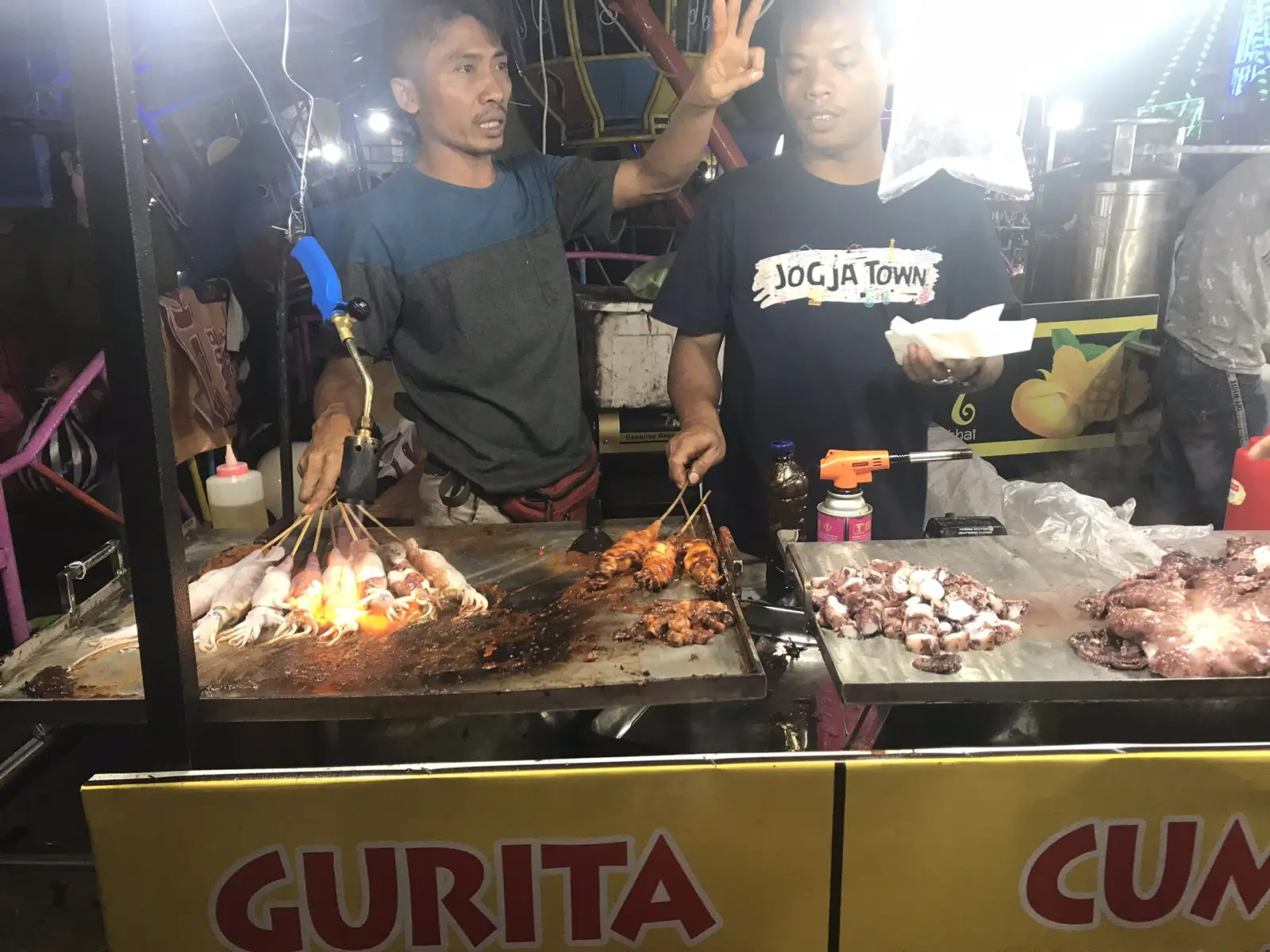
Warungs, markets, drivers, temples, homestays and everything outside the tourist strips.
Hotels, malls, supermarkets and restaurants in Bali, Jakarta and the bigger towns — often with 3% added.
A real float in rupiah. Withdrawals are capped low and now carry the region's steepest ATM fees.
Money changers with a rate too good to be true, and ATM fees that recently jumped as high as Rp 50,000.
The money itself
- 2,000 RpGrey
- 5,000 RpBrown
- 10,000 RpPurple
- 20,000 RpGreen
- 50,000 RpBlue
- 100,000 RpRed
100, 200, 500 and 1,000 rupiah, light and largely ignored — small change is often rounded, and a shop short of coins may hand you a sweet instead. Nobody will mind if you never carry them.
Everything is priced in thousands, and the 10,000 and 100,000 notes are one digit apart in a dim warung. The 100,000 is also the largest note in circulation, which is why an ATM withdrawal comes out as a thick stack. Count what you are given, and break big notes at a supermarket rather than at a stall.
Every way to pay, and whether it works for a visitor
Whether a payment method exists in Indonesia and whether you can use it are different questions. This table answers the second one: no local bank account, no local SIM, no residency.
Cash (rupiah)
WorksThe default across the country and the only thing a warung, a driver, a market stall, a temple donation box or a village homestay will take. Bali's tourist strips are the exception rather than the rule.
Visa / Mastercard
Works, with a catchFine at hotels, malls, supermarkets and mid-range restaurants in Bali, Jakarta and the larger towns. Many merchants add a surcharge that the payment rules say they should not, and small businesses do not take cards at all.
3% surcharge is common
QRIS, via a linked foreign app
Depends where you're fromIndonesia's national QR is on every counter, and Bank Indonesia has opened it to visitors from Malaysia, Thailand, Singapore, South Korea, Japan and China, who can scan with their own bank or wallet app. Arriving from anywhere else, QRIS is closed to you — there is no tourist version to register for.
Apple Pay / Google Pay
Works, with a catchWorks where a contactless terminal exists, which means hotels, malls and chains in the cities. It inherits the card inside it, so it is no help where cards are refused.
GoPay, OVO and the local wallets
Residents onlyWhat Indonesians actually pay with, and tied to an Indonesian number and bank account. You will see them offered constantly, including in the ride-hailing apps, where a foreign card or cash is the visitor's route instead.
Grab / Gojek
WorksBoth take a foreign card in the app for rides and food delivery, and both let you pay the driver in cash. In Bali, note that some areas restrict app pickups and the drivers will tell you where to stand.
Cash
Indonesia is a cash country with a card-shaped tourist bubble around it. Inside Seminyak, Ubud, central Jakarta or a resort, a card covers most of the day. Step outside — a warung, a market, a boat, a homestay, a national park gate, a scooter rental — and it is rupiah in hand or nothing.
Carry more than feels necessary, because topping up got expensive: several banks now charge foreign cards a flat fee per withdrawal, one of them as much as Rp 50,000, against a cap that is usually a couple of million rupiah. Fewer, larger withdrawals are the only lever you have.
Break the 100,000 notes when you can. A stall selling a 15,000 rupiah plate cannot change the biggest note in the country, and the resulting hunt for change is the standard tourist experience in every Indonesian market.
Cards
Acceptance follows formality: hotels, malls, supermarkets, chain restaurants and the larger tourist businesses take Visa and Mastercard, and everything smaller does not. Contactless exists in the cities and is patchy elsewhere.
The surcharge is the recurring irritation. A 3% addition for paying by card is common in Bali despite the rules discouraging it, and it is usually mentioned at the moment you produce the card. Ask when you agree a price for anything substantial — a villa, a tour, a course of dives.
Decline dynamic currency conversion at terminals and machines alike. Being charged in your own currency hands the rate to the merchant's processor and costs several percent on top of everything else.
ATMs
Indonesian ATM fees for foreign cards climbed sharply through 2026 — Mandiri introduced a Rp 50,000 access fee in February, and some banks charge a percentage instead of a flat amount. Combined with a per-transaction cap that is often only a couple of million rupiah, this is now among the more expensive countries in the region to draw cash in.
Take the maximum the machine allows, use bank-branch machines in daylight rather than free-standing ones on a strip, and check the screen before confirming: the fee is disclosed, and it varies by bank far more than it used to.
Machines dispense 100,000 and 50,000 notes. If the machine offers a choice, take the smaller denomination — it saves you the change problem later.
Changing money
Use an authorised money changer — the licensed ones display a Bank Indonesia permit and a proper shopfront — or a bank. The rate on a whiteboard down a Kuta side street that beats everyone else's is the oldest trick in Bali, and the money is taken back during the counting, by a practised hand, while you are distracted by the calculator.
The defence is procedural rather than clever: agree the rate, watch the count, count it yourself before anything leaves the counter, and do not hand the notes back once counted. If a changer objects to any of that, leave.
Bring clean, newer notes if you are changing dollars — older series and marked notes get a worse rate or a refusal — and change enough at once that you are not repeating the exercise daily.
Costs that are not the price
The Bali tourist levy
Foreign visitors to Bali pay a one-off levy of Rp 150,000 per person, separate from any visa. Pay it on the official Love Bali site or app before you travel and keep the QR voucher; the lookalike sites that appear in search results charge more for the same thing.
Service charge and tax, written ++
Hotels and formal restaurants add a service charge and government tax on top of the menu price, usually shown as ++ and amounting to roughly a fifth. Warungs and street food quote the price you pay.
Tipping is optional and small
Not expected where the ++ already appears. Elsewhere, rounding up, or 10,000–20,000 rupiah for a driver or a guide who earned it, is normal and welcome.
The card surcharge
Around 3% for paying by card, common in Bali and rarely posted. It is worth asking about before a villa, a tour or a rental, where the percentage is real money.
Paying for transport
Ride apps over everything
Grab and Gojek cover the cities and most of Bali with fixed fares in the app, paid by foreign card or in cash. They are also the honest price benchmark for a taxi or a driver quoting you a day rate.
Jakarta's transit takes a card, Bali has none
Jakarta's MRT and TransJakarta run on stored-value cards bought and topped up at stations. Bali has no meaningful public transport: it is scooters, drivers and ride apps, all of which are cash or in-app.
Ferries and domestic flights
Domestic airlines and the fast boats to the Gilis and Nusa islands sell online by card. Buying at a harbour desk is cash, and the ports where that happens are exactly where the ATM will be a free-standing one with the highest fee.
What you may carry in and out
Carrying cash in and out
Rupiah above Rp 100 million must be declared to customs, and taking that much out requires central-bank permission. Foreign currency equivalent to more than Rp 100 million must also be declared on arrival and departure.
Rupiah does not travel
There is little market for rupiah abroad and the rate is poor where one exists. Spend it down before you fly, or change what is left at the airport knowing the rate is the price of leaving it late.
Common questions about money in Indonesia
Can tourists use QRIS in Indonesia?
Only if you are visiting from Malaysia, Thailand, Singapore, South Korea, Japan or China — Bank Indonesia's cross-border links let those visitors scan Indonesian QRIS codes with their own bank or wallet app. There is no tourist registration for anyone else, so it is cash or card.
How much is the Bali tourist tax and how do I pay it?
Rp 150,000 per person, once per visit, and separate from your visa. Pay it on the official Love Bali website or app before you travel and keep the QR voucher on your phone. Unofficial sites charge a markup for the same payment.
How do I avoid money changer scams in Bali?
Use an authorised changer with a Bank Indonesia licence displayed, or a bank. Agree the rate first, watch the count, then count it yourself and do not hand the notes back. The classic scam removes notes during a re-count while you are looking at a calculator, and a rate well above everyone else's on the street is the bait.
How much are ATM fees in Indonesia?
They rose sharply in 2026 — commonly Rp 25,000–50,000 per withdrawal, with some banks charging a percentage instead, against caps that are often only a couple of million rupiah. Withdraw the maximum at a bank-branch machine and check the fee on screen before confirming.
Do I need cash in Bali?
Yes. Hotels, malls and tourist restaurants take cards, but warungs, markets, drivers, temple donations, scooter rentals and anything outside the main strips are cash. Expect a 3% surcharge where cards are accepted at smaller places.
Should I tip in Indonesia?
Only lightly. Formal places already add a service charge and tax as ++ on the bill. Elsewhere, rounding up or 10,000–20,000 rupiah for a driver or guide is generous and appreciated.
What should I do with leftover rupiah?
Spend it. Rupiah has little value outside the country and exchanges abroad price it poorly if they take it at all. Anything above the equivalent of Rp 100 million also has to be declared to customs on the way out.
Where these figures come from
Checked against the following on . Fees and thresholds move; where a figure varies by bank or by machine, this page gives the range rather than inventing a single number.