Travel money
Travel money in Laos: cash or card?
Kip, in cash or by QR. The law makes kip the only currency you may pay in, cards barely leave the hotels, and the QR code on every stall is reachable with a foreign card through a bridging app rather than a local bank account.
Lao kip (LAK, ₭) · figures checked against the sources at the foot of this page
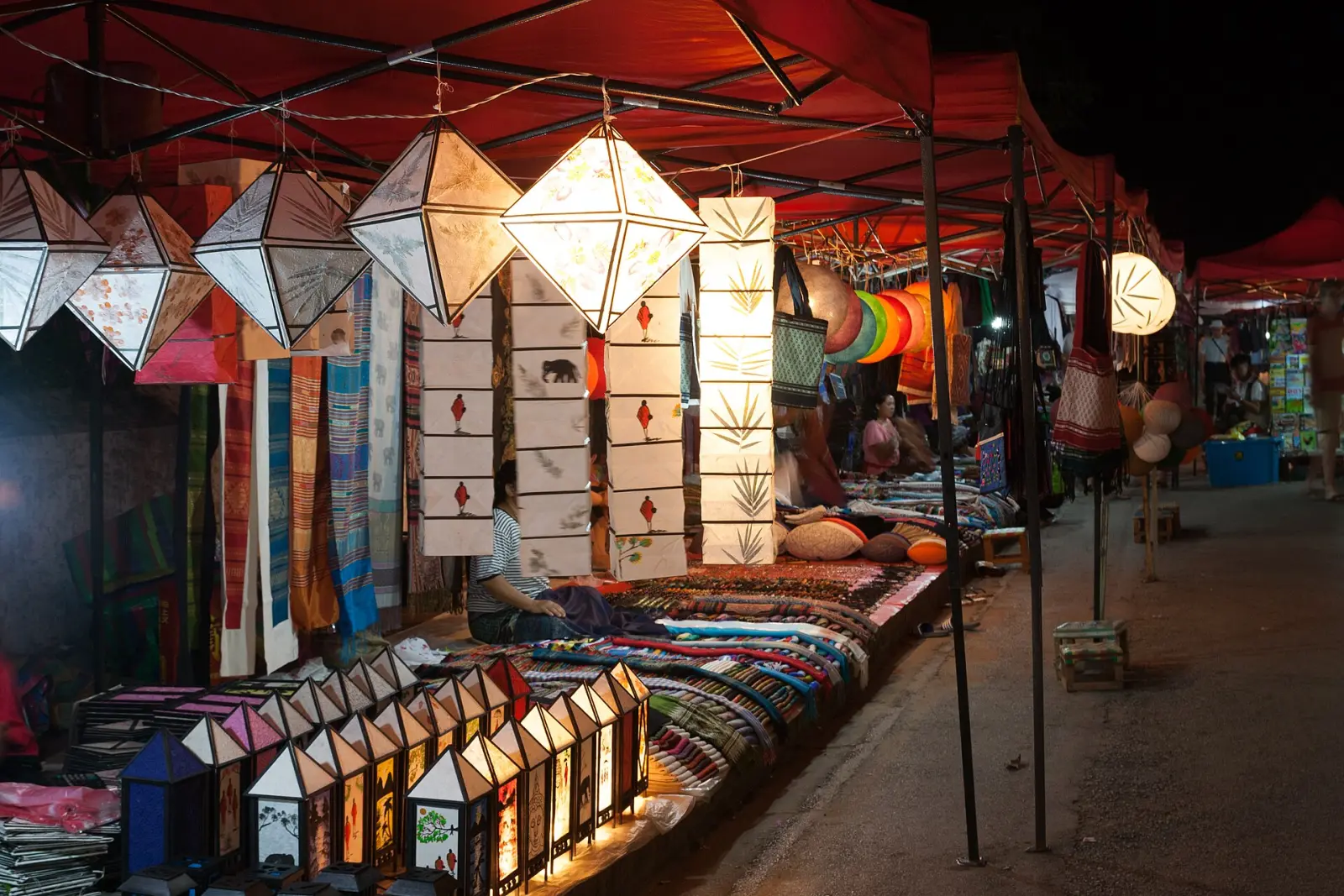
Everything outside a hotel lobby: markets, noodle shops, tuk-tuks, guesthouses, temples, and every town too small for a bank.
City hotels, better restaurants and tour operators in Vientiane and Luang Prabang. Little else, and usually with a surcharge.
Kip, in quantity — the notes are large numbers and the ATM cap is low. A QR app on the phone covers most of the rest.
ATM fees of 20,000–40,000 ₭ against a cap of about 2 million ₭, which makes each withdrawal expensive per kip.
The money itself
- 1,000 ₭Brown-red
- 2,000 ₭Blue-green
- 5,000 ₭Red-purple
- 10,000 ₭Blue
- 20,000 ₭Green
- 50,000 ₭Purple
- 100,000 ₭Orange-brown
None. Att coins exist on paper and have not circulated in living memory, so the smallest thing you will handle is a note — and after years of inflation, even the smallest notes buy very little.
Everything here is priced in thousands, and the zeros are where the mistakes live: a 10,000 and a 100,000 differ by one digit in a dim market at night. The 100,000 note is also recent enough that some small vendors would rather not break it. Count the digits, not the length of the number, and keep a working stack of the middle denominations.
Every way to pay, and whether it works for a visitor
Whether a payment method exists in Laos and whether you can use it are different questions. This table answers the second one: no local bank account, no local SIM, no residency.
Cash (kip)
WorksThe default everywhere and the only thing that works in villages, at markets, in noodle shops and on the road between towns. It is also the only currency you may legally be charged in — a business quoting you dollars or baht is doing something the foreign exchange law does not allow.
Lao QR via LOCA Pay or EzyKip
WorksTwo apps bridge a foreign card to the national QR system, which is the payment method that actually spread here. LOCA Pay charges your card per transaction with nothing to preload; EzyKip, from BCEL, is a wallet you top up and can also draw on at BCEL ATMs. Either turns a phone into the thing a market stall can accept.
Around 2–3% either way, per payment or per top-up
Visa / Mastercard
Works, with a catchCity hotels, the better restaurants in Vientiane and Luang Prabang, tour operators and a few larger shops. Outside those, terminals are rare, and businesses that do take cards commonly add the processing fee to the bill.
2–5% surcharge is common
Lao bank QR (BCEL One and the rest)
Residents onlyThe apps Lao people actually use are tied to a Lao bank account, which needs residency paperwork. You are not signing up for one on a tourist visa — the bridging apps above exist precisely because of that.
Thai banking apps, via QR
Depends where you're fromSince 2024 the Thailand–Laos cross-border link lets visitors arriving from Thailand scan Lao QR codes with their own Thai banking app. Useful on an overland trip from Nong Khai or Chiang Khong, irrelevant if you flew in from anywhere else.
US dollars and Thai baht
Not acceptedBoth circulated widely here for decades and both are now off the menu for paying: the 2022 foreign exchange law makes kip the only permitted currency for domestic transactions, and exchange must go through banks and licensed bureaux. Bring them as currency to change, not as currency to spend.
Apple Pay / Google Pay
Works, with a catchOnly where a contactless terminal exists, which means a handful of city businesses. The phone is far more useful here running a QR app than tapping a card machine.
American Express / JCB / UnionPay
Works, with a catchOccasional at the top end of the hotel market and effectively nowhere else. UnionPay does slightly better than the other two at ATMs.
Cash
Laos skipped a step. Card terminals never spread beyond the hotels, and QR did — a stall selling noodles or a woman selling fruit at a provincial market will have a printed QR code even though no bank ever sold her a card machine. For a visitor that leaves two workable methods: kip in hand, and a phone app that can pay a Lao QR code.
Carry more cash than feels normal, because the machines make it awkward to top up. Withdrawal caps are low, fees are per withdrawal, and once you leave the main towns the ATMs thin out fast — Muang Ngoi, the Bolaven villages, the road to the Vietnamese border. Withdraw in the last town with a bank, not in the first one without.
Prices are quoted in kip by law and increasingly in practice. If a tour operator or guesthouse quotes you dollars or baht, that is a habit rather than a rule, and the conversion they apply is theirs — ask for the kip price.
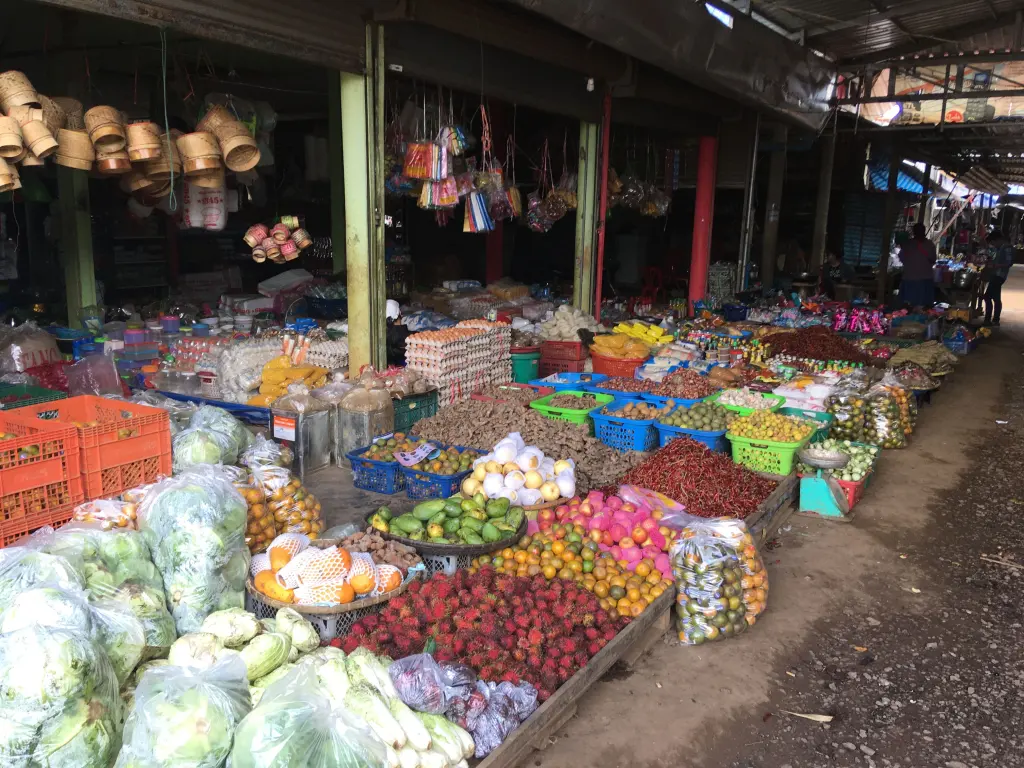
Cards
Card acceptance is the narrowest of the four countries covered here. Vientiane and Luang Prabang have hotels, restaurants and tour operators that take Visa and Mastercard; beyond that, assume no. Treat the card as the thing that pays for accommodation and the big-ticket tour, not as a way to get through a day.
Where cards are taken, a surcharge of 2–5% is normal and often only mentioned when you produce the card. Ask before a large payment: on a multi-day tour or a week's hotel, that percentage is the largest avoidable cost on this page.
Decline the offer to be charged in your own currency — that is dynamic currency conversion, priced by the merchant's processor rather than by your card network. The correct answer at any terminal is kip.
ATMs
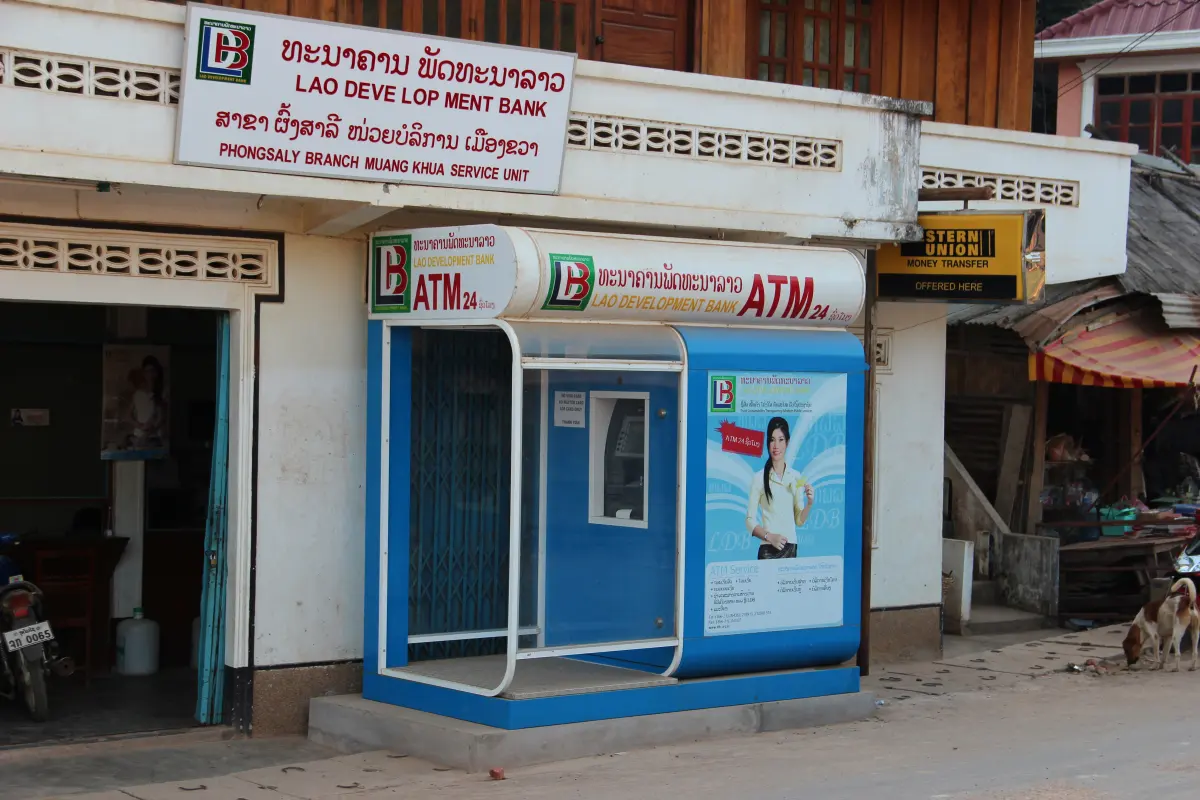
Lao ATMs pair a fixed fee with a low per-transaction cap, which is the expensive combination: the same charge applies whether you take a little or the machine's maximum, and the maximum is not much. Effectively no bank waives the fee for foreign cards, so the only lever you have is taking the largest amount the machine allows.
There is a better lever, and it is not obvious: go inside the branch. A counter withdrawal against your card typically clears several times the ATM limit for the same single fee, which turns three expensive withdrawals into one. Bring your passport, go during banking hours, and expect the paperwork to take a few minutes.
Coverage is a town-by-town matter. BCEL has the widest network and is the name to look for; smaller towns may have one machine, and it may be empty or offline after a holiday weekend. Top up before you leave a town with a bank, and decline the machine's offer to convert the amount for you.
Changing money
Change money at a bank or at a bureau displaying its licence. The 2022 foreign exchange law pushed exchange back into the formal system and away from the shops and street dealers that used to handle it, and the parallel market that once ran alongside the official rate is the thing that law exists to close.
Dollars and baht are the two currencies to bring, and baht is genuinely useful if you are arriving overland from Thailand. Bring notes clean and unmarked, and bring your passport: exchange counters ask for it.
Do not stockpile kip. It has depreciated hard in recent years, there is no market for it once you leave, and a foreign bureau will either refuse it or price it as a curiosity. Change what you need in stages and spend the remainder before you fly.
Costs that are not the price
VAT and the service charge
VAT is 10%, raised back from 7% in March 2024, and formal hotels and restaurants commonly add a 10% service charge as well. Both appear at the foot of the bill rather than on the menu price. At market and street level the price you are told is the whole price.
The card surcharge
2–5% for paying by card, mentioned late and applied quietly. On a tour, a hotel stay or a boat trip it is worth asking about first — QR or cash removes it entirely.
Tipping is optional and recent
Not traditional and not expected outside tourist businesses. Where it happens it is rounding up, a small note for someone who carried bags, and a couple of dollars a day equivalent for a guide on a multi-day trip. Hotels that already add a service charge are not asking for more.
The visa is paid in cash at the border
A visa on arrival is paid in cash at the crossing, most reliably in US dollars, with a small surcharge at some land borders. This is the one moment where dollars remain genuinely useful, so carry clean notes for it or arrange the eVisa in advance and pay by card.
Paying for transport
The Laos–China Railway is a cash-or-agent purchase
Tickets for the fast train between Vientiane, Vang Vieng, Luang Prabang and the north are sold at station counters for cash, and the official app needs a Lao phone number to register. Foreigners who want to book ahead — worth doing, since popular trains sell out — generally use a licensed online agent and pay by card.
Buses, boats and tuk-tuks
Bus stations, slow-boat tickets and minivans are cash, and so is anything arranged through a guesthouse. Tuk-tuk fares are agreed before you get in, in kip; in Vientiane the LOCA ride app gives a fixed fare and accepts a card, which doubles as a check on what the street price should be.
What you may carry in and out
Declaring cash
The threshold is much lower than the USD 10,000 travellers assume, and published figures disagree — guidance in circulation puts it around USD 2,000 to 2,500, while the official trade portal simply defers to the Bank of the Lao PDR. If you are carrying anything near that, declare it rather than guess.
Kip does not travel
There is effectively no market for kip abroad, and taking a pile of it home means writing it off. Spend down to a last meal and a ride to the airport.
Common questions about money in Laos
Can tourists use QR payments in Laos?
Yes, through a bridging app rather than a Lao bank account. LOCA Pay charges an international card per transaction, and EzyKip — from BCEL, the largest Lao bank — is a wallet you top up from a foreign card and can also use at BCEL ATMs. Both pay the same Lao QR codes that market stalls and noodle shops display, and each takes a fee of roughly 2–3%. Visitors arriving from Thailand can also scan Lao QR codes with their Thai banking app.
Can I use US dollars or Thai baht in Laos?
Not to pay with. The 2022 foreign exchange law makes kip the only permitted currency for domestic transactions, and exchange has to go through banks or licensed bureaux. Both currencies remain useful as something to change into kip, and dollars are still the practical way to pay a visa fee at the border, but a price quoted to you in dollars or baht is not one you have to accept.
How much is the ATM fee in Laos?
Typically 20,000–40,000 kip per withdrawal, charged by the Lao bank on top of your own bank's fees, with effectively no free machines. What makes it bite is the per-transaction cap of roughly 2–2.5 million kip. A withdrawal at a bank counter inside the branch usually clears several times that for the same single fee.
Can I pay by card in Laos?
In city hotels, better restaurants and tour operators in Vientiane and Luang Prabang, yes, often with a 2–5% surcharge. Almost everywhere else — markets, noodle shops, guesthouses, transport, anywhere rural — it is cash or a QR payment. Card acceptance here is narrower than in Thailand, Vietnam or Cambodia.
How much cash should I carry in Laos?
More than you would elsewhere, and topped up before you leave a town with a bank. ATM caps are low, fees are charged per withdrawal, and machines thin out quickly outside the main towns and can be empty after a holiday. A QR app on your phone covers a good share of everyday spending and takes the pressure off the cash.
How do I pay for the Laos–China Railway?
Station counters take cash in kip, and the official ticketing app requires a Lao phone number to register. To book ahead — sensible on the Vientiane–Luang Prabang run — most visitors use a licensed online agent and pay by card, then collect or show the ticket with their passport.
What should I do with leftover Lao kip?
Spend it before you leave. Kip has no market outside the country and foreign exchange counters will either refuse it or offer next to nothing. Change money in stages rather than in one lump, and aim to finish with just enough for the last meal and the ride to the airport.
Where these figures come from
Checked against the following on . Fees and thresholds move; where a figure varies by bank or by machine, this page gives the range rather than inventing a single number.