Travel money
Travel money in Cambodia: cash or card?
Two currencies in one wallet: US dollars for anything over a dollar, riel for the change — and, unusually for the region, a national QR system a visitor can actually use through the central bank's own tourist app.
Cambodian riel (KHR, ៛) · figures checked against the sources at the foot of this page
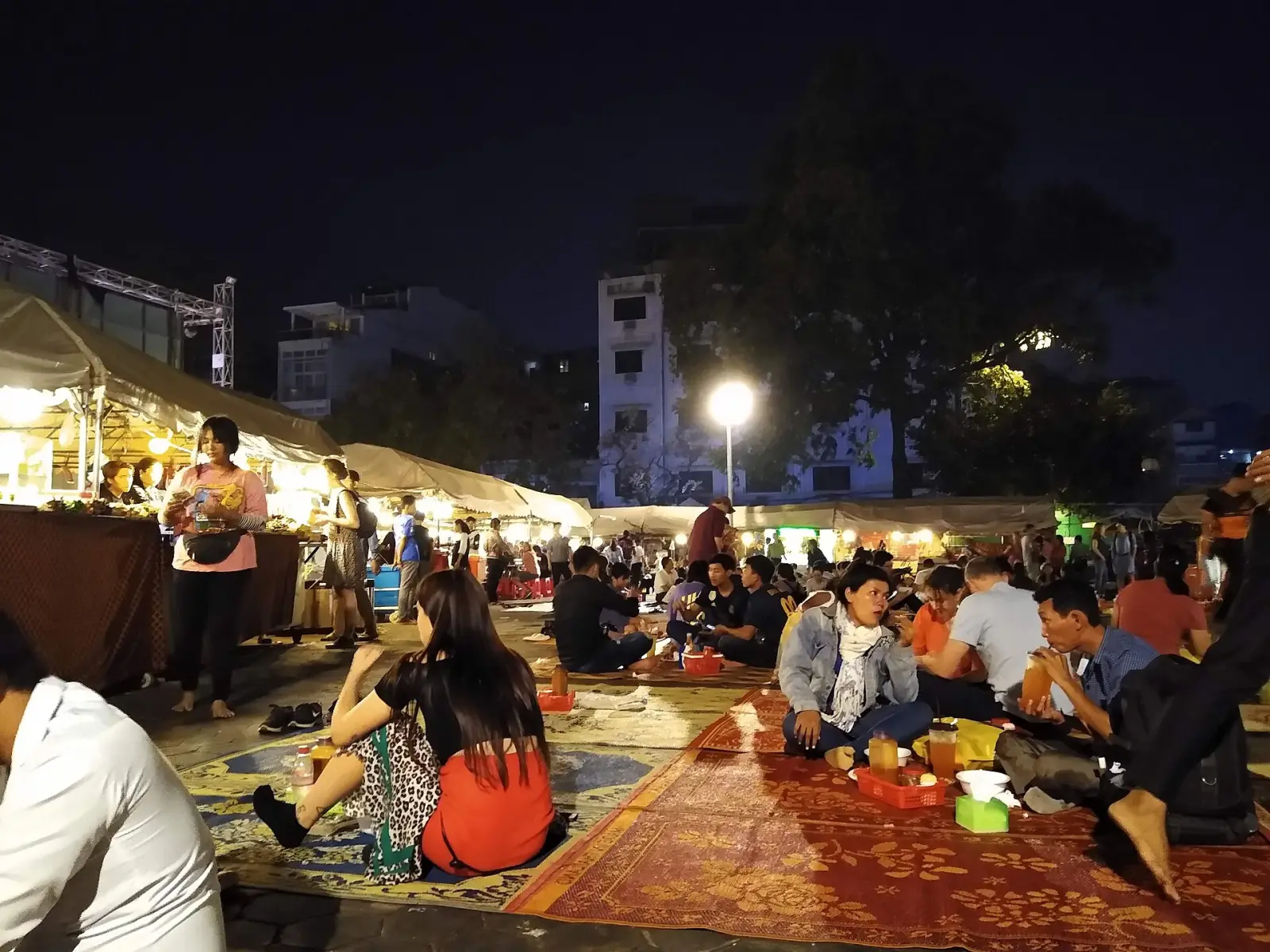
Everything, in either currency: markets, tuk-tuks, street food, guesthouses, temples, anywhere outside a city centre.
City hotels, better restaurants, malls, supermarkets and the Angkor ticket office. Usually with 2–3% added.
Clean, unmarked dollar notes for the larger amounts, riel for everything under a dollar and for change.
The ATM: roughly US$4–6 a withdrawal, sometimes more, on top of whatever your own bank charges.
The money itself
- 500 ៛Red-purple
- 1,000 ៛Purple-blue
- 2,000 ៛Green-yellow
- 5,000 ៛Violet-brown
- 10,000 ៛Blue
- 20,000 ៛Pink-grey
- 50,000 ៛Brown
None in practice. Riel coins were minted in 1994 and never really circulated, and US coins are not used here at all — which is the neat part of the system: the dollar's small change is simply riel notes.
Tills work at a conventional 4,000 riel to the dollar. Hand over a five-dollar note for a $3.50 bowl of noodles and the change comes back as 2,000 riel, without anyone reaching for a calculator or a market rate. Prices below a dollar are quoted in riel, prices above it usually in dollars, and a single bill can be settled in both.
Every way to pay, and whether it works for a visitor
Whether a payment method exists in Cambodia and whether you can use it are different questions. This table answers the second one: no local bank account, no local SIM, no residency.
US dollars (cash)
WorksThe de facto currency for anything above a dollar, and what most ATMs dispense. The condition attached is physical: notes must be clean. Tears, tape, holes, heavy creases or writing get a note refused, by banks and market stalls alike, and nobody will make an exception because you are a visitor.
Riel (cash)
WorksNot a lesser currency here but the other half of the same system — the small change of the dollar, and the price unit for anything under one. You will accumulate it whether you plan to or not, because that is how change comes back.
KHQR via the Bakong Tourists app
WorksThe National Bank of Cambodia publishes an app for visitors: load it from a Visa or Mastercard and scan the KHQR sticker that sits on well over a million counters, carts and tuk-tuk windscreens. It is the one national QR system in the region open to someone without a local bank account, and it solves both the small-change problem and the damaged-note problem at once.
Visa / Mastercard
Works, with a catchCity hotels, better restaurants, malls, supermarkets, tour operators and the Angkor ticket office take them. Markets, tuk-tuks, street food and most guesthouses do not, and plenty of the businesses that do accept cards add the processing fee to your bill.
2–3% surcharge is common
Your home bank app or wallet, via KHQR
Depends where you're fromCross-border links mean visitors from Thailand, Malaysia and Vietnam can scan KHQR with their own banking apps, and Alipay, WeChat Pay and UnionPay users are covered at participating merchants. From anywhere else, the Bakong Tourists app is the route in.
Apple Pay / Google Pay
Works, with a catchWorks where the terminal takes contactless, which in Cambodia means newer city businesses rather than the norm. Plenty of card machines here are still chip-and-PIN, so treat the phone as a convenience rather than the plan.
JCB / UnionPay / American Express
Works, with a catchHotels, larger restaurants and some ATMs, and little below that. UnionPay has the widest reach of the three. Carry a Visa or Mastercard as the card that actually works.
Grab / PassApp / Tada
WorksThe ride apps operate in Phnom Penh and Siem Reap, take a foreign card or cash, and quote the fare before you accept it — which removes the negotiation that a street tuk-tuk still involves.
Cash
Cambodia is a dual-currency economy in the literal sense: both currencies are in the same drawer, and the split is by size rather than by preference. Anything substantial is priced in dollars, anything under a dollar in riel, and the change from a dollar payment comes back in riel at the conventional four thousand to one. Nothing about this is informal — banks quote it, ATMs offer both, and menus mix them.
What surprises visitors is the strictness about dollar notes. A note with a tear, a taped repair, a hole, a scribble or a heavy crease is routinely refused, and that goes for banks too. Ask for clean notes when you exchange, check the ones an ATM gives you, and keep them flat rather than folded into a pocket.
The small denominations are also thinning out. Banks have been withdrawing $1, $2 and $5 notes as part of the push back towards riel, and some large retailers now give all change in riel by policy. It is less a problem than it sounds — riel is exactly what you want for the small purchases — but it does mean the dollars you carry should be the larger ones.
Cards
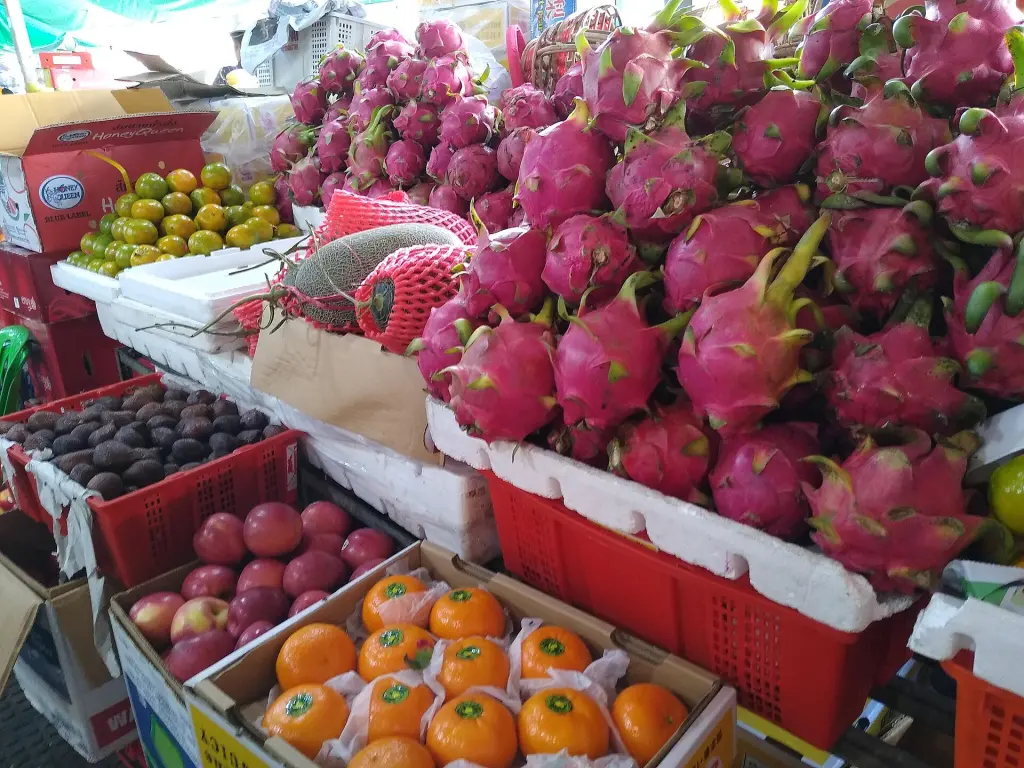
Card acceptance follows the formal economy and stops where it stops: hotels, city restaurants, malls, supermarkets, travel agents, the Angkor Enterprise ticket counters. Everything that makes up an ordinary day — the market, the tuk-tuk, the noodle stall, the guesthouse in a small town — is cash or QR.
Where cards are taken, a 2–3% surcharge is common and often mentioned only when you produce the card, so it is worth asking before a large payment. Terminals are frequently chip-and-PIN rather than contactless, which is worth knowing if your plan was to tap a phone.
The Angkor pass is the one big-ticket item most visitors buy, and it can be paid by card at the ticket centre or bought online in advance — one fewer reason to be carrying a large amount of cash around Siem Reap.
As everywhere, decline the offer to be charged in your home currency. That is dynamic currency conversion, and the rate comes from the merchant's processor rather than your card network.
ATMs
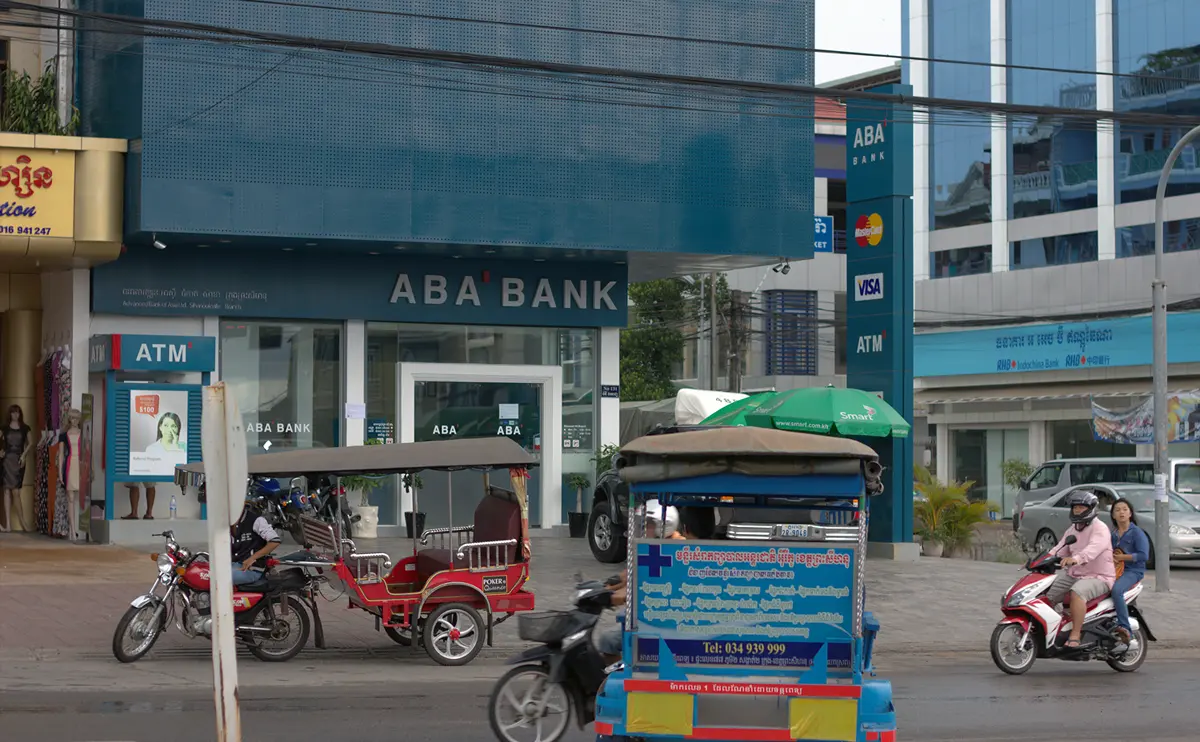
Cambodian ATMs charge foreign cards a fixed fee per withdrawal — usually somewhere between four and six dollars, with some banks higher and effectively none free. Because it is a flat charge, the arithmetic is the familiar one: take out more, less often, and check the on-screen figure before confirming, since it varies by bank and moves.
Machines ask which currency you want. Dollars are the useful answer for most spending, but the notes matter: a machine that pays in hundreds has handed you money that a market cannot break, so choose a withdrawal amount that produces twenties where you can, and break large notes at a supermarket or a hotel. Taking some riel instead is a reasonable way to arrive with usable small money.
One thing this country makes easy: because dollars are ordinary here, an ATM withdrawal is a genuinely good way to obtain them, and there is no separate exchange step for most travellers.
Changing money
For once, exchange is the simple part. If you are coming from a country whose currency is easy to convert, dollars are the thing to bring, and money changers — a fixture of every market, with rates posted on a board — will turn dollars, baht, euros and more into riel at rates that beat the airport. Banks do the same with less haggling and more paperwork.
You do not really need to buy riel deliberately. Paying in dollars generates it as change, in exactly the quantities the small end of the economy runs on, and that is how most visitors end up holding it.
Riel is the wrong currency to be holding on the way out, though. It trades poorly outside the country and is close to worthless at a foreign bureau, so treat the last day as the day to spend it down — on a meal, a tuk-tuk to the airport, or something small — rather than as an exchange problem to solve.
Costs that are not the price
VAT, service charge and the accommodation tax
Businesses in the formal sector add 10% VAT, commonly a 5–10% service charge on top of that, and accommodation carries a further small tax. Below that level — the market, the street stall, the family guesthouse — the price you are told is the price you pay.
There is no tourist VAT refund
Unlike Thailand and Vietnam, Cambodia runs no refund scheme for departing visitors, so the 10% is simply part of what things cost. Nothing to collect, no forms to keep, no queue at the airport.
The card surcharge
2–3% for paying by card is normal and usually mentioned at the moment you hand it over. On a tour, a multi-night stay or a motorbike rental this is the easiest cost on the page to avoid, by asking first and paying cash or QR.
Tipping is optional and small
Not obligatory anywhere, and not expected at street stalls. Where it has become normal is rounding up for a tuk-tuk driver, a dollar or two for a guide or a driver on a day trip, and something similar for hotel staff. Riel is as welcome as dollars.
The visa is paid in cash dollars
Arriving without an e-visa means paying the visa fee at the border in US dollars in cash, and border posts are not the place to discover your notes are creased. Carry clean bills for it, or arrange the e-visa before you travel and pay by card.
Paying for transport
Tuk-tuks and ride apps
Grab, PassApp and Tada cover the cities, quote the fare up front, and take a card in the app or cash to the driver. A tuk-tuk flagged in the street is cash and a price agreed before you get in — the apps are a useful sanity check on what that price should be.
Buses and boats
Long-distance buses and boats can be booked online and paid by card, which is the easy way to do it; buying at the station or the pier is cash. City buses in Phnom Penh are cash, and cheap enough that a single note covers several rides.
Airports and the Angkor pass
Airport taxis and the fixed-price transfers into town are dollars in cash. The Angkor pass, the other unavoidable purchase in Siem Reap, takes cards at the ticket centre and can be bought online in advance.
What you may carry in and out
Declaring cash
More than US$10,000 or the equivalent has to be declared to customs on the way in and on the way out. Leaving with more than that when you did not declare it on arrival means obtaining a permit from the National Bank of Cambodia and clearance from the customs department first.
Riel does not travel
There is effectively no market for riel outside Cambodia and no reason to carry it home. Dollars, by contrast, leave as easily as they arrived — within the declaration limit above.
Common questions about money in Cambodia
Should I use US dollars or riel in Cambodia?
Both, and the split takes care of itself. Prices above a dollar are usually quoted in dollars and prices below it in riel, and change from a dollar payment comes back as riel at a conventional 4,000 to the dollar. Carry clean dollar notes for the larger amounts and let riel accumulate for the small ones.
Can tourists use KHQR or Bakong in Cambodia?
Yes — and this is the exception in the region. The National Bank of Cambodia publishes the Bakong Tourists app, which a visitor tops up with a Visa or Mastercard and then uses to scan KHQR codes at more than a million merchants. Visitors from Thailand, Malaysia and Vietnam can also scan with their own banking apps, and Alipay, WeChat Pay and UnionPay work at participating merchants.
Why won't anyone accept my dollar bills in Cambodia?
Because they are damaged. Notes with tears, tape, holes, writing or heavy creases are routinely refused by shops, markets and banks. Slightly marked notes have become more acceptable since a 2025 government push on the subject, but badly damaged ones are still turned away. Ask for clean notes when exchanging and check what an ATM gives you.
How much is the ATM fee in Cambodia?
Typically about US$4–6 per withdrawal, charged by the Cambodian bank on top of anything your own bank takes, and some banks charge more. There are effectively no fee-free machines, so fewer, larger withdrawals cost less. Most ATMs let you choose dollars or riel, and the exact fee shows on screen before you confirm.
Can I pay by card in Cambodia?
In city hotels, better restaurants, malls, supermarkets, tour operators and at the Angkor ticket office, yes. Markets, tuk-tuks, street food and small guesthouses are cash or KHQR. Expect a 2–3% surcharge often enough that it is worth asking before a large bill, and expect chip-and-PIN terminals more often than contactless.
Do I need cash for the Cambodian visa and the Angkor pass?
For a visa on arrival, yes — it is paid at the border in US dollars in cash, and the notes need to be in good condition. An e-visa arranged before you travel is paid by card instead. The Angkor pass takes cards at the ticket centre or can be bought online in advance.
What should I do with leftover Cambodian riel?
Spend it before you leave. Riel has almost no value outside the country and foreign bureaux will either refuse it or offer a derisory rate. A last meal, the ride to the airport or a market purchase is the sensible way to clear it; dollars, by contrast, travel fine.
Where these figures come from
Checked against the following on . Fees and thresholds move; where a figure varies by bank or by machine, this page gives the range rather than inventing a single number.