Travel money
Travel money in Turkey: cash or card?
Cards work further into daily life than most visitors expect, right into the bazaars. What costs you money here is the conversion: machines and terminals push their own exchange rate hard, and declining it is the whole skill.
Turkish lira (TRY, ₺) · figures checked against the sources at the foot of this page
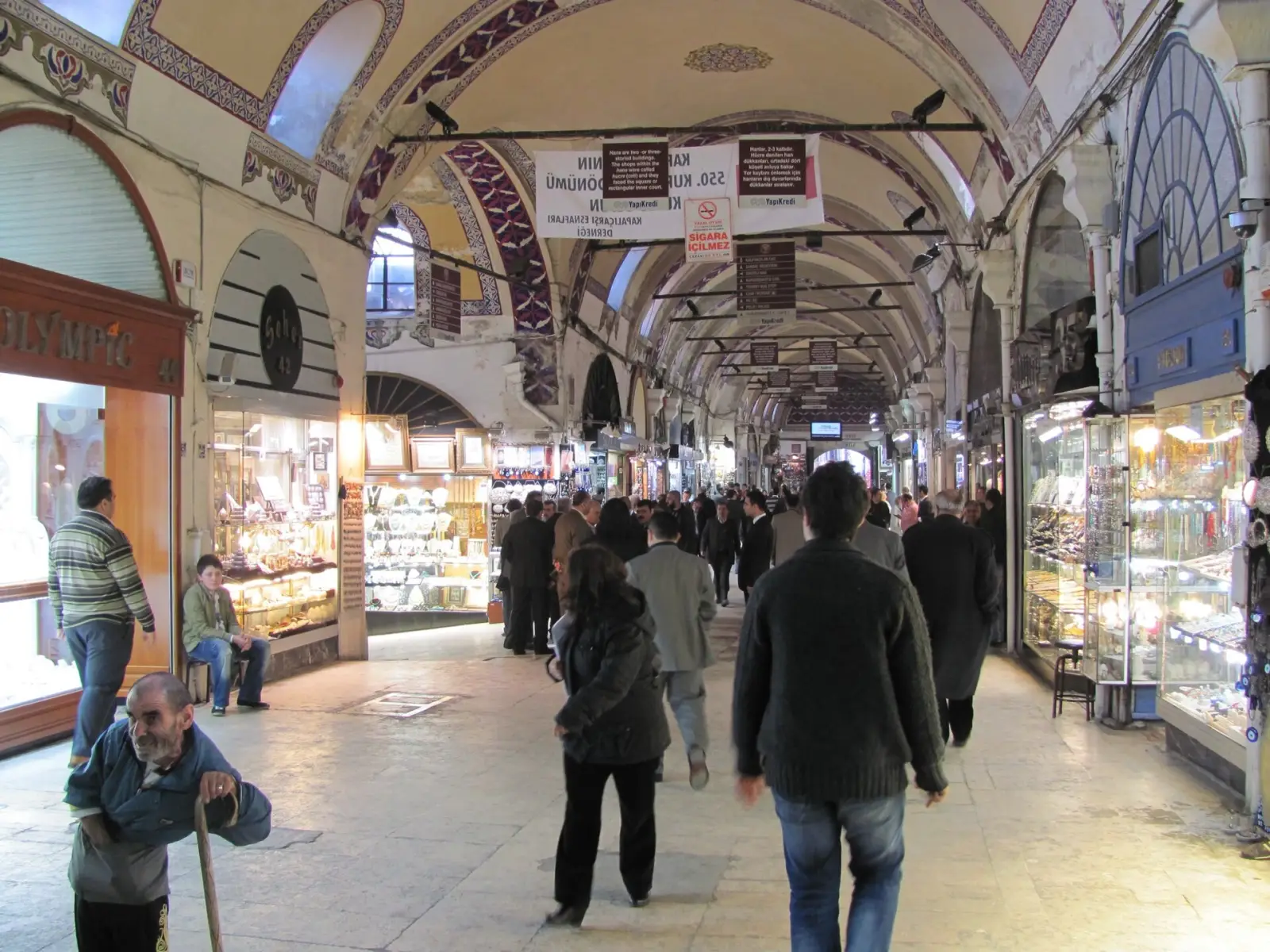
Market stalls, small lokantas, taxis outside the apps, tips, and the çay that arrives while you bargain.
Nearly everything else, contactless included — shops, restaurants, museums, and much of the Grand Bazaar.
A modest float in lira. Prices move with inflation, so today's float is not last year's.
Dynamic currency conversion. Turkish machines and terminals push it harder than almost anywhere in this set.
The money itself
- 5 ₺Brown
- 10 ₺Red
- 20 ₺Green
- 50 ₺Orange
- 100 ₺Blue
- 200 ₺Purple
1, 5, 10, 25 and 50 kuruş, and 1 lira. Inflation has hollowed the small ones out — the 1 lira coin is the one that still buys anything, and the kuruş pieces mostly accumulate.
Lira has lost value quickly for years, which has two practical consequences: a price you read in an old guide is meaningless, and the notes in your pocket are worth less each month you hold them. Change what you need rather than a lump for the whole trip, and do not treat leftover lira as a store of value.
Every way to pay, and whether it works for a visitor
Whether a payment method exists in Turkey and whether you can use it are different questions. This table answers the second one: no local bank account, no local SIM, no residency.
Visa / Mastercard
WorksAccepted remarkably widely, contactless included — supermarkets, restaurants, museums, taxis, and a great many stalls inside the Grand Bazaar and the Spice Bazaar. Turkey's card infrastructure is better than its cash-country reputation suggests.
Cash (lira)
WorksAlways accepted and still the natural choice at market stalls, small lokantas, for tips and for a taxi flagged in the street. It is also what gives you leverage when bargaining.
Apple Pay / Google Pay
WorksWorks anywhere contactless does, which is most terminals in the cities. Nothing to register locally.
Istanbulkart
WorksThe transit card for Istanbul's metro, trams, buses, funiculars and ferries. Buy it at a kiosk or a station machine and top it up with cash or a card — there is no cash fare on Istanbul transport at all.
Euros and dollars
Works, with a catchTaken by some tourist businesses at a rate they set, and museums price foreign admission in euros even though you pay in lira. As a way to pay it is a poor deal; as something to change at a döviz office it is the best currency to bring.
American Express
Works, with a catchHotels and larger businesses. Not something to rely on outside them.
Cash
Turkey surprises people: contactless terminals reach into places a visitor assumes are cash-only, including a large share of the Grand Bazaar. A card covers most of a day comfortably in Istanbul, Izmir or Antalya.
Cash still earns its place at market stalls, in small lokantas, for tips, for taxis hailed on the street, and as the thing that makes a negotiated price feel final. Keep a working float rather than a war chest — inflation means lira held for weeks is lira quietly losing value.
Withdraw in reasonable amounts and check what the machine proposes to charge. Fees on foreign cards at Turkish ATMs have become significant, and they are disclosed on screen before you confirm.
Cards
Card acceptance is broad and contactless is standard. Terminals are modern and quick, and even small purchases are routinely tapped.
The recurring cost is dynamic currency conversion, pushed harder here than in most countries: a terminal or a cash machine offers to bill you in euros, dollars or pounds, using its own rate, and the screen is designed to make that look like the safe option. It is not. Choose lira every time, at the till, at the hotel desk and at the machine.
Card fees and surcharges are rare in shops but do appear on some tours and transfers, usually mentioned only when you produce the card.
ATMs
Turkish bank machines charge foreign cards a fee that has grown considerably, and it varies between banks rather than being a national standard — the state banks and the private ones price differently, and the machine tells you before it dispenses. Read that screen: it is the number that matters, not the rate on the wall outside.
Every machine will also offer to convert the amount for you. Decline it and take lira. Accepting adds several percent on top of whatever fee you just agreed to.
Withdrawing larger amounts less often is the right shape here, tempered by not wanting to hold lira for weeks. A few days at a time is the practical compromise.
Changing money
Turkey is one of the countries where changing cash is genuinely worth doing. Döviz offices in the cities charge no commission, post their rates publicly and compete with each other; the Grand Bazaar's changers and the shops around Sirkeci and Taksim are competitive enough that the difference between them is small.
Airport counters and hotels are the expensive option, as everywhere. Change a small amount on arrival and the rest in town.
Bring euros or dollars in clean notes. Both are exchanged everywhere and both get better rates than less common currencies, which some offices will not take at all.
Costs that are not the price
Museum entry is priced for foreigners in euros
Hagia Sophia, Topkapı, Ephesus and the major sites publish a foreign-visitor price pegged to the euro, well above the local rate, payable in lira at the day's conversion. It is official policy rather than a hustle, and it makes a sightseeing-heavy trip cost meaningfully more than the guidebooks written in lira suggest.
Tipping is around 10%
Restaurants: about 10%, in cash where you can, since it is more likely to reach the staff. Round up for taxis and leave small amounts for hotel staff and hamam attendants. Some restaurants add a service charge, in which case extra is not needed.
The çay is part of the sale
Tea, coffee and a seat while you look at carpets or lamps are hospitality, not an obligation, and accepting them does not commit you to buying. Bargaining is expected in bazaars and not in shops with printed prices.
You can reclaim VAT if you live outside Turkey
Non-residents can claim on purchases from about ₺2,000 at an authorised retailer on the same day. Get the tax-free form at the till, have it stamped at customs on the way out, and claim at the airport counter — the refund arrives after the operator's cut.
Paying for transport
Istanbul takes no cash at all
Metro, tram, bus, funicular, Marmaray and the ferries all require an Istanbulkart — there is no cash fare and no paper ticket. Buy the card at a kiosk or a station machine, top it up with cash or a card, and note that a single card can pay for several people on most modes.
Intercity buses and trains
The intercity bus network is extensive and sold online or at the otogar by card. High-speed rail between Istanbul, Ankara and Konya books online, and popular departures sell out.
Taxis and the apps
Istanbul taxis are metered and legally must use it; BiTaksi and Uber summon the same fleet with the fare in the app, which removes the argument. Airport transfers are frequently a fixed price agreed in advance.
What you may carry in and out
Declaring cash
Amounts above the equivalent of USD 10,000 must be declared to customs on entry and exit. Turkish lira taken out is subject to its own limit, well above anything a visitor would hold.
Lira is not worth carrying home
It changes back poorly abroad and loses value while you hold it. Spend down and change the remainder before you fly.
Common questions about money in Turkey
Can I pay by card in Turkey?
More than you would expect. Contactless is standard in shops, restaurants and museums and reaches into much of the Grand Bazaar. Keep cash for small lokantas, street stalls, tips and taxis hailed on the street.
Why do Turkish ATMs offer to charge me in my own currency?
That is dynamic currency conversion, and Turkish machines push it harder than most. Accepting hands the exchange rate to the machine's operator instead of your bank and typically costs several percent on top of the withdrawal fee. Always choose lira.
Should I change money before I go to Turkey?
No — change a little on arrival and the rest at a döviz office in the city, where rates are competitive and commission-free. Bring euros or dollars in clean notes; airport counters and hotels are the expensive options.
Why is museum entry more expensive for me?
Turkey publishes a foreign-visitor price for its major sites, pegged to the euro and well above the local rate, payable in lira. It is official policy rather than a scam, and it is worth budgeting for if you plan a lot of sightseeing.
How do I pay for public transport in Istanbul?
With an Istanbulkart, and only with an Istanbulkart — there is no cash fare on the metro, trams, buses or ferries. Buy one at a kiosk or station machine and top it up with cash or a card. One card can usually cover several travellers.
How much should I tip in Turkey?
About 10% in restaurants, ideally in cash so it reaches the staff, and rounding up for taxis. Small amounts for hotel staff and at a hamam are normal. Where a service charge is already on the bill, nothing further is expected.
Should I hold lira for the whole trip?
No. Inflation has been high for years, so lira loses value while you hold it and old price information is worthless. Change what you need for a few days at a time and finish the trip with very little.
Where these figures come from
Checked against the following on . Fees and thresholds move; where a figure varies by bank or by machine, this page gives the range rather than inventing a single number.