Travel money
Travel money in India: cash or card?
UPI runs the country and there is now a visitor route into it, but it takes paperwork on arrival. Until it is set up, cards cover the cities and cash covers everything else — and the service charge on your restaurant bill is optional by law.
Indian rupee (INR, ₹) · figures checked against the sources at the foot of this page
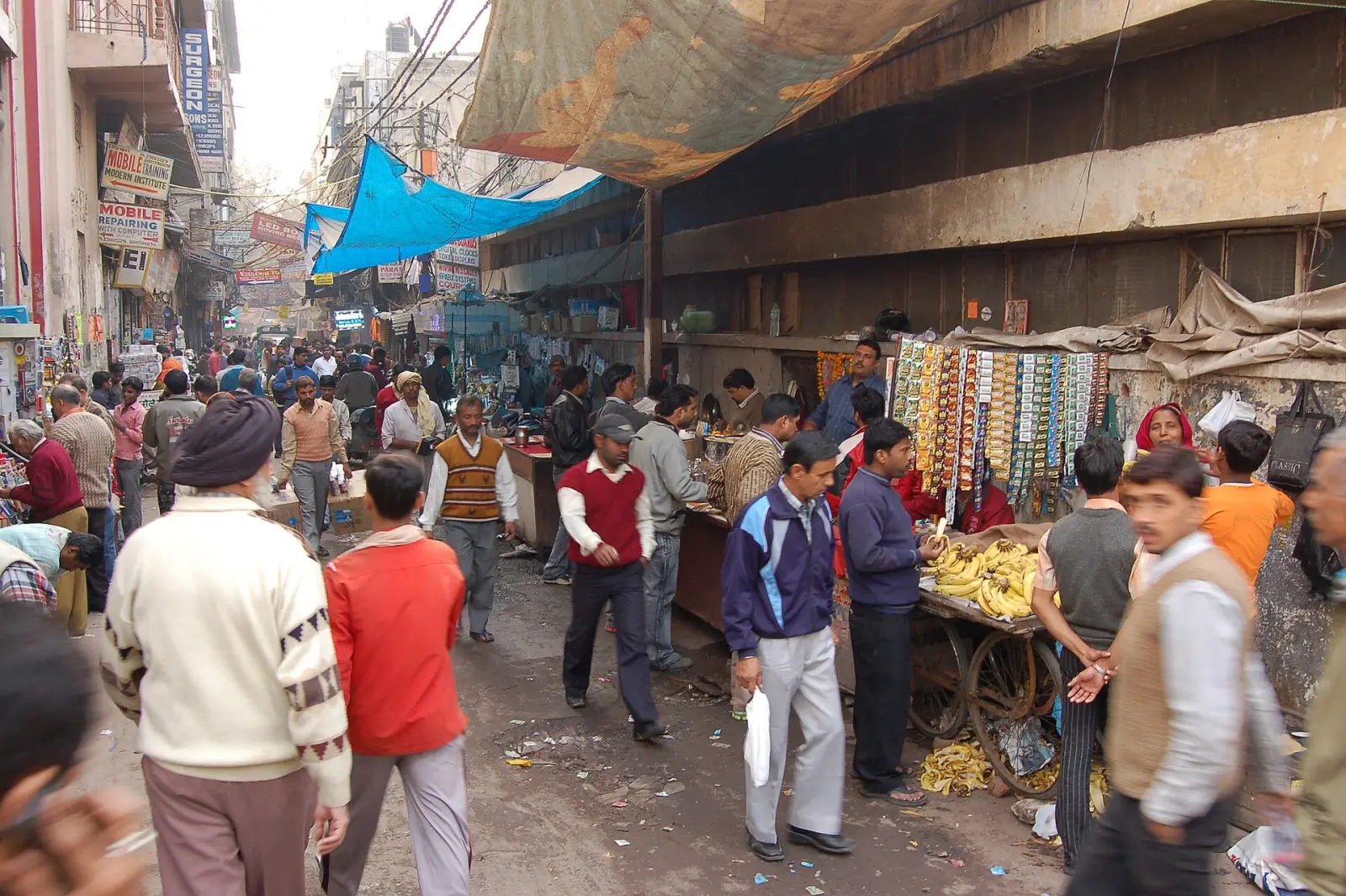
Autos and rickshaws, dhabas and street food, markets, temples, small-town everything and most tips.
Hotels, malls, chain restaurants, supermarkets, airlines and the bigger shops in the cities.
A working float in ₹100 and ₹500 notes. Small notes matter more than the total.
Private-bank ATMs charging ₹200–335 a withdrawal, when most public-sector bank machines charge nothing.
The money itself
- 10 ₹Chocolate brown
- 20 ₹Greenish yellow
- 50 ₹Fluorescent blue
- 100 ₹Lavender
- 200 ₹Bright yellow
- 500 ₹Stone grey
₹1, ₹2, ₹5, ₹10 and ₹20. They matter for autos, chai and temple offerings, and they are the change nobody ever seems to have — which is why a shop may hand you a sweet or a few rupees short rather than break a note.
The ₹2,000 note was withdrawn from circulation in 2023, so ₹500 is the largest note you will meet, and even that is awkward at a tea stall or an auto. Ask for ₹100s where a machine offers the choice, and break ₹500s in a supermarket or at a chain rather than at the stall you actually want to buy from.
Every way to pay, and whether it works for a visitor
Whether a payment method exists in India and whether you can use it are different questions. This table answers the second one: no local bank account, no local SIM, no residency.
Cash (rupees)
WorksAccepted everywhere and required for a great deal of ordinary life: autos and cycle rickshaws, dhabas, street food, markets, temple offerings, tips, small-town shops. Small notes are the working currency.
Visa / Mastercard
Works, with a catchReliable in hotels, malls, chain restaurants, supermarkets, airlines and larger city shops, contactless included. Below that it thins out fast, and some merchants add a fee for taking a card.
UPI via a visitor wallet
Works, with a catchUPI is what the country actually pays with, and NPCI's UPI One World opens it to travellers: a prepaid wallet needing no Indian bank account or number, loaded from an international card, with unused balance refundable. The catch is the setup — passport and visa details, then an in-person identity check at an authorised counter, with availability still expanding. Worth it for a long trip, not for a weekend.
Apple Pay / Google Pay
Works, with a catchApple Pay is not meaningfully available here. Google Pay is enormous in India but running on UPI rather than on your card, so the app you have at home is not the app being used around you.
Paytm, PhonePe and the UPI apps
Residents onlyThe QR code on every counter, stall and auto windscreen. They need an Indian bank account and number, which is precisely the gap UPI One World exists to bridge.
Uber / Ola / Rapido
WorksAll take a foreign card in the app and all let you pay the driver in cash, which many drivers prefer. The in-app fare is also the sanity check against a quoted price for an auto.
Cash
India is a UPI country with a cash floor that a visitor spends most of their time standing on. Until the wallet is set up, the split is simple: cards in hotels, malls and chains, cash for the autos, the dhabas, the markets, the temples and the tips — which is to say, for most of what makes a day here.
Denominations matter more than the amount. With the ₹2,000 note gone, ₹500 is the biggest you will hold, and an auto driver or a chai stall genuinely cannot change it at seven in the morning. Keep a stock of ₹100s and ₹50s and break the larger notes wherever it is easy — a supermarket, a chain café, a hotel.
Withdraw from a public-sector bank machine where you can. State Bank of India, Bank of Baroda, Punjab National Bank and their peers mostly do not add a fee for a foreign card, while the private banks commonly charge ₹200 or more per withdrawal.
Cards
Card acceptance in the cities is broad at the formal end — hotels, malls, supermarkets, chain restaurants, airlines, larger shops — and contactless is common. Below that, the terminal is the exception rather than the rule.
Two frictions are worth knowing. Indian terminals sometimes want a PIN even for small contactless amounts, and some merchants pass on a card fee, particularly for large payments or on tours. Ask before a big transaction rather than at the till.
Decline dynamic currency conversion at both terminals and cash machines. Paying in rupees and letting your own bank convert is always the better rate.
ATMs
The bank on the machine matters more here than in most countries. Public-sector banks — State Bank of India, Bank of Baroda, Punjab National Bank, Canara — largely do not levy their own charge on a foreign card. Most private banks do, typically ₹200 to ₹335 per withdrawal, which against a ₹10,000 cap is a painful percentage.
So the routine is: look for a public-sector bank's machine, take the maximum it allows, and check the on-screen fee before confirming. Machines inside branches during banking hours are the safest for cash availability and for help if a card is retained.
Ask for smaller denominations where the option appears. A machine that pays out only ₹500 notes has handed you a change problem for the rest of the day.
Changing money
Change money at a bank or an RBI-authorised dealer rather than at a hotel desk or an unlicensed shop. Authorised changers are common in the cities and at airports, and the paperwork — passport, sometimes a form — is normal rather than a warning sign.
Bring clean notes if you are carrying dollars, euros or pounds; torn or heavily marked foreign notes are refused. Keep the encashment receipt if you may want to convert rupees back, since it is sometimes asked for.
Rupees cannot be exported by non-residents, so plan to finish the trip with very little. Convert what is left before you reach immigration rather than after.
Costs that are not the price
The service charge is optional
Restaurants add a service charge of around 10% and it is not compulsory — India's consumer authority prohibited making it mandatory, and the Delhi High Court upheld that. Asking for it to be removed is your right and is not a scene; GST on the bill, by contrast, is legitimate and is not negotiable.
Tipping is normal and small
Round up for an auto, ₹50–100 for a porter or a driver on a day out, around 10% in a restaurant where the service charge has been removed or never applied. Cash, handed over directly, is the way it is done.
Dual pricing at monuments
The Taj Mahal, the forts, the national parks and many state monuments charge foreign visitors a separate, much higher published rate. It is official and printed at the gate rather than a hustle — but it belongs in the budget, since a day of sightseeing can cost several times what a local pays.
There is no practical tourist VAT refund
GST is part of the price and no working refund scheme exists for departing visitors, so nothing needs collecting and no forms need keeping.
Paying for transport
Metros run on their own cards
Delhi, Mumbai, Bengaluru and the rest sell tokens and smart cards at station counters and machines, many of which now take a card or UPI. Contactless bank-card entry is arriving on some lines but is not something to count on.
Trains are booked online, and early
IRCTC sells long-distance rail online and popular routes sell out weeks ahead; foreign-card payments on the official site can be awkward, which is why many visitors book through an agent or a reseller. The Tourist Quota exists precisely for late bookings.
Autos, rickshaws and ride apps
Autos are cash and negotiation unless the meter is used; Uber, Ola and Rapido remove the negotiation and take a card in the app. For a first trip, the app fare is the reference price worth having before you flag anything down.
What you may carry in and out
Rupees may not leave with you
Non-residents are prohibited from taking Indian rupees out of the country. Spend down or convert back before departure — and keep an encashment receipt if you exchanged cash on arrival.
Declaring foreign cash
Foreign currency must be declared on arrival above USD 5,000 in banknotes, or USD 10,000 including travellers' cheques. Declaring it is also what lets you take it out again.
Common questions about money in India
Can tourists use UPI in India?
Yes, through UPI One World — a prepaid wallet for foreign visitors that needs no Indian bank account or phone number, loads from an international card, and refunds any unused balance. Setting it up means passport and visa details plus an in-person identity check at an authorised counter, and availability is still expanding, so it suits a longer trip more than a short one.
Do I need cash in India?
Yes, daily. Cards work in hotels, malls, chains and airlines, but autos, street food, dhabas, markets, temples and tips are cash. Keep a stock of ₹100 notes — with the ₹2,000 note withdrawn, ₹500 is the largest in circulation and is hard to break at a stall.
Which ATMs are cheapest in India?
Public-sector banks — State Bank of India, Bank of Baroda, Punjab National Bank, Canara — mostly do not charge foreign cards their own fee. Most private banks charge ₹200–335 per withdrawal, which is steep against a ₹10,000 cap. Take the maximum and check the fee on screen before confirming.
Do I have to pay the service charge on an Indian restaurant bill?
No. A mandatory service charge is prohibited — the consumer authority banned it and the Delhi High Court upheld the ban — so you can ask for it to be removed. GST on the same bill is a genuine tax and is not optional.
Can I take rupees out of India?
Not if you are a non-resident: exporting Indian currency is prohibited. Spend down or convert back before you reach the airport, and keep your encashment receipt in case it is asked for.
Why do monuments cost me more than the person in front of me?
Official dual pricing. The Taj Mahal, the forts and most state monuments and parks publish a much higher foreign-visitor rate at the gate. It is policy rather than a scam, and it is worth putting in the budget for a sightseeing-heavy trip.
Can I use Apple Pay or Google Pay in India?
Apple Pay is not meaningfully available. Google Pay is everywhere but running on UPI rather than on your card, so it is the local rails under a familiar name — your home wallet will not simply work at a QR code.
Where these figures come from
Checked against the following on . Fees and thresholds move; where a figure varies by bank or by machine, this page gives the range rather than inventing a single number.