Travel money
Travel money in United Arab Emirates: cash or card?
Paying is effortless — cards and phones work nearly everywhere, and the dirham is pegged to the dollar so the rate never moves. What catches people is what gets added: service charges, a nightly tourism fee, and a metro that needs its own card.
UAE dirham (AED, AED) · figures checked against the sources at the foot of this page
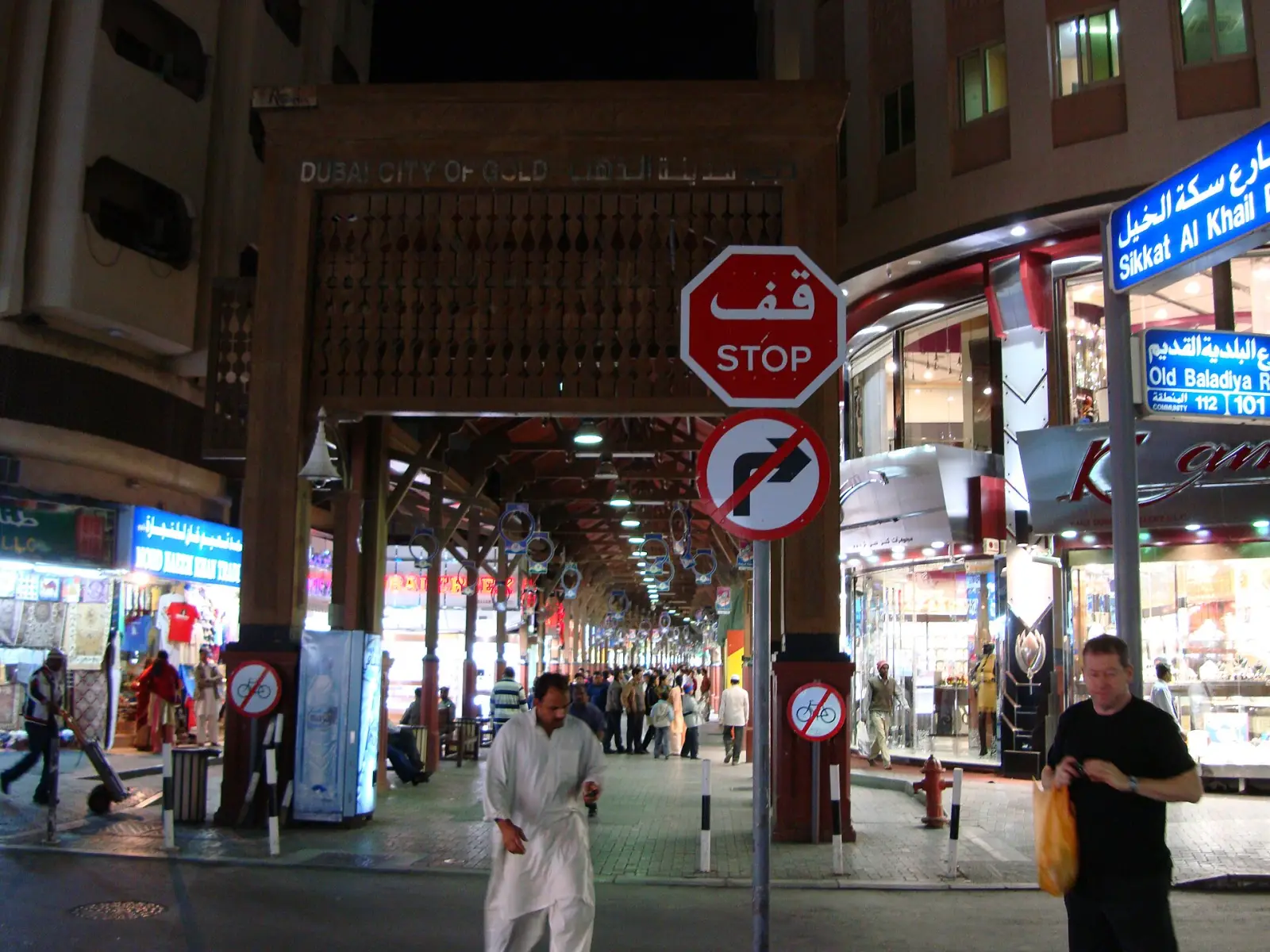
Souks, small cafeterias, some abras and taxis outside the apps, tips, and bargaining leverage.
Everything else, contactless included — malls, restaurants, hotels, supermarkets, taxis.
A small float of dirhams, mostly for tips and the souks. A card covers the rest of the day.
The additions: a 10% service charge, VAT, municipality fees and a per-night tourism dirham on your hotel bill.
The money itself
- 5 AEDBrown
- 10 AEDGreen
- 20 AEDBlue
- 50 AEDPurple
- 100 AEDPink-red
- 200 AEDYellow-brown
- 500 AEDBlue-grey
25 and 50 fils, and 1 dirham. Small change rounds away in most places, but coins are exactly what an abra across the creek and a car-park machine want.
The dirham is pegged to the US dollar at a fixed rate, so unlike almost everywhere else in this set the exchange rate genuinely does not move. That makes comparing an exchange counter's offer easy: any meaningful gap from the peg is the counter's margin, not the market.
Every way to pay, and whether it works for a visitor
Whether a payment method exists in United Arab Emirates and whether you can use it are different questions. This table answers the second one: no local bank account, no local SIM, no residency.
Visa / Mastercard
WorksAccepted essentially everywhere, contactless included and down to very small amounts. The UAE has one of the highest contactless rates anywhere and Dubai is pushing hard towards cashless.
Apple Pay / Google Pay
WorksWorks wherever contactless does, which is nearly everywhere, and clears larger amounts without a PIN. Nothing to register locally.
Cash (dirhams)
WorksAlways accepted and still useful for souks, small cafeterias, abras, tips and the bargaining that gold and textiles are bought with. A small float is enough.
Nol card
WorksDubai's transport card, needed for the metro, tram and public buses — the gates do not take an ordinary bank card. Buy and top one up at any station; taxis and ride apps take cards instead.
American Express
WorksWell accepted here by regional standards — hotels, malls, restaurants and airlines. Still not universal at the smallest end.
Cash
The UAE is as close to a solved payment problem as a visitor will find. Cards and phones cover malls, restaurants, hotels, supermarkets, taxis, attractions and petrol stations, and contactless is the norm rather than the exception.
Cash keeps a narrow role: the gold and spice souks, small cafeterias, the abras that cross Dubai Creek, tips for the many people who will carry, park and open things for you, and the negotiation that souk shopping runs on. A couple of hundred dirhams covers all of it.
Withdrawing is easy and the rate is fixed by the peg, so the only variable is the fee — some machines charge a fixed amount per withdrawal, disclosed on screen.
Cards
Acceptance is close to universal and terminals are fast. Because the dirham is pegged to the dollar, the exchange rate on a card payment is stable in a way it is nowhere else in this set — what varies is your own bank's margin, not the market.
Decline dynamic currency conversion regardless. A terminal offering to bill you in your home currency is still applying its own rate, and against a pegged currency the gap is pure cost.
Card surcharges are rare in shops and restaurants. What is not rare is a hotel pre-authorisation held against your card for incidentals, which can sit on the balance for days after checkout.
ATMs
Machines are everywhere — malls, metro stations, petrol stations, hotel lobbies — and most local banks charge a fixed fee of roughly AED 20 to 30 for a foreign card, shown on screen before you confirm.
Because the fee is fixed and the peg makes the rate predictable, the arithmetic is simple: take out enough for the souks and tips in one go rather than topping up repeatedly.
Choose dirhams and decline the conversion, as everywhere. Machines in tourist areas push it, and it costs several percent against a rate that is otherwise fixed.
Changing money
Exchange houses here are genuinely competitive — Al Ansari, Al Fardan, LuLu and their peers post rates that sit close to the peg, and they are in every mall. They comfortably beat hotel desks and airport counters.
Because the dirham is pegged to the dollar, judging an offer is unusually easy: compare what you are quoted against the fixed rate and the difference is the margin you are paying.
Dirhams change back easily and hold their value, so there is no urgency to spend down to zero — though the coins are worth using up.
Costs that are not the price
The service charge, and everything after it
Restaurants and hotels add a 10% service charge, and hotel bills then carry VAT, a municipality fee and a per-night tourism dirham of roughly AED 7–20 depending on the property's rating. The room rate you booked is not the number you pay at checkout.
Tipping is expected more than elsewhere in the region
Where the 10% service charge is on the bill, another 5–10% for good service is normal. Where it is not, 10–15% is the expectation. Small amounts for valets, porters and drivers are routine — much of the service workforce depends on them.
You can reclaim the 5% VAT
Tourists can claim VAT back on purchases from AED 250 at shops registered with the Planet scheme, validated at the airport before departure. You get most of the VAT back, minus a small per-claim fee.
Alcohol carries its own costs
Drinking is legal for visitors in licensed venues, priced high, and taxed on top. It is a budgeting fact rather than a payment one, but it is the line that most surprises people on a bar bill.
Paying for transport
Dubai's metro needs a Nol card
The gates do not accept ordinary bank cards: buy a Nol at any station, top it up with cash or a card, and use it on the metro, tram and buses. A digital version and broader card acceptance are being rolled out, but the card is still the reliable answer today.
Taxis and ride apps take cards
Dubai and Abu Dhabi taxis are metered and accept cards, and Careem and Uber quote the fare in the app. Airport journeys carry a supplement that appears on the meter rather than being negotiated.
Abras and the creek
The wooden abras crossing Dubai Creek are a coin fare paid on board — one of the few genuinely cash-only things left in the city, and one of the cheapest.
What you may carry in and out
Declaring cash
More than AED 60,000 or the equivalent in cash, cheques or precious metals must be declared to customs when entering the UAE.
The dirham is pegged
The rate against the US dollar is fixed rather than floating, which means a quoted rate that differs noticeably from the peg is telling you about the counter's margin rather than about the market.
Common questions about money in United Arab Emirates
Do I need cash in the UAE?
Very little. Cards and phones work almost everywhere including taxis and small shops. Keep a couple of hundred dirhams for the souks, the abras across the creek, small cafeterias and tips — which are expected more here than in most of the region.
Can I tap my bank card on the Dubai Metro?
Not at the gate. The metro, tram and public buses run on the Nol card, which you buy and top up at any station with cash or a card. Taxis and ride apps take cards directly, and a more open payment system is being rolled out but is not the reliable option yet.
What gets added to a hotel bill in Dubai?
Typically a 10% service charge, VAT, a municipality fee and a tourism dirham of about AED 7–20 per room per night depending on the hotel's rating. Together they make the checkout total meaningfully higher than the rate you booked.
How much should I tip in the UAE?
More than elsewhere in the region. Where the 10% service charge is on the bill, 5–10% extra for good service is normal; where it is not, 10–15%. Small amounts for valets, porters and drivers are routine and genuinely relied upon.
Can I claim VAT back when leaving the UAE?
Yes, on purchases of AED 250 or more from shops in the Planet tax-free scheme. Validate the claim at the airport before departure; you receive most of the 5% back after a small per-claim fee.
Is the dirham pegged to the dollar?
Yes, at a fixed rate, which makes the UAE unusual in this set: the exchange rate does not move. That also makes it easy to judge an exchange counter — any meaningful gap from the peg is the margin you are being charged.
Are there ATM fees in the UAE?
Usually a fixed AED 20–30 per withdrawal from the local bank, disclosed on screen, on top of your own bank's charges. Since the rate is pegged and the fee is fixed, one larger withdrawal beats several small ones.
Where these figures come from
Checked against the following on . Fees and thresholds move; where a figure varies by bank or by machine, this page gives the range rather than inventing a single number.