Travel money
Travel money in Germany: cash or card?
The one country in western Europe where a foreign card genuinely lets you down: many terminals take only Girocard, the German debit scheme, so cash is not a backup here — it is the plan.
euro (EUR, €) · figures checked against the sources at the foot of this page
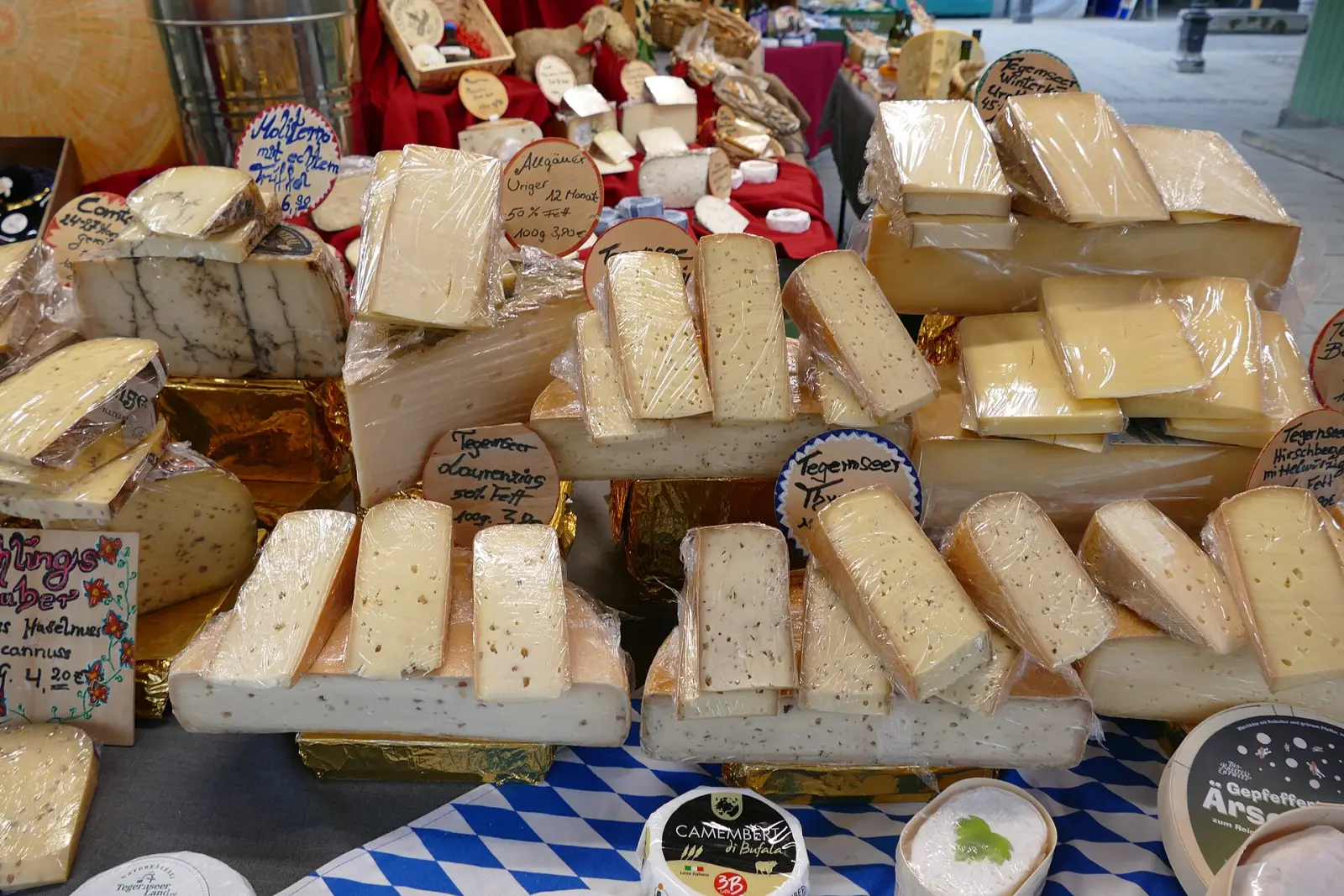
Bakeries, bars, markets, small restaurants, guesthouses, kiosks, and anywhere with a Nur Barzahlung sign.
Supermarkets, chains, department stores, petrol stations and hotels. Check for the Visa or Mastercard logo, not just a terminal.
Real money — a €50 float is not excessive here, and topping up before a weekend is sensible.
Assuming a card will be taken. The cost of being wrong is a walk to a cash machine mid-meal.
The money itself
- €5Grey
- €10Red
- €20Blue
- €50Orange
- €100Green
- €200Yellow-brown
1, 2, 5, 10, 20 and 50 cents, then €1 and €2. Every coin is legal tender across the whole euro area whatever national design is on the back, so change collected in one country spends fine in the next.
Germans use coins in a way most visitors have got out of the habit of, and a bakery or a bar will happily take €4.50 in change. The €500 note is gone from issue but you will still occasionally meet €200s, which small businesses dislike as much as they do anywhere else.
Every way to pay, and whether it works for a visitor
Whether a payment method exists in Germany and whether you can use it are different questions. This table answers the second one: no local bank account, no local SIM, no residency.
Cash (euros)
WorksAccepted everywhere without exception, and expected in more places than anywhere else in western Europe. A café, a bakery, a Kneipe, a market stall or a small restaurant may take nothing else, and is entitled to say so.
Visa / Mastercard
Works, with a catchFine in supermarkets, chains, hotels, department stores and petrol stations. Below that, a terminal often runs Girocard only, because it costs the business a fraction of what an international card does. Look for the logo on the door rather than assuming.
Some places set a card minimum, often €10–20
Apple Pay / Google Pay
Works, with a catchWorks wherever the underlying card would, which is the catch: a phone loaded with a foreign Visa is subject to exactly the same acceptance gap. Contactless coverage itself is good and improving.
Girocard
Residents onlyThe domestic debit scheme that most German terminals really run on. It comes with a German bank account, so a visitor cannot have one — knowing the name is still useful, because it explains why the machine in front of you is refusing a perfectly good card.
American Express
Works, with a catchHotels, airlines, department stores and larger chains. Almost nowhere else. Do not travel on it alone.
Cash
Germany's attachment to cash is real, and it is not just older people in small towns. Bakeries, bars, Imbiss stands, market stalls, many restaurants and plenty of guesthouses take cash only or set a card minimum, and a sign reading Nur Barzahlung — cash only — is a normal thing to meet at the door of an otherwise modern business.
Plan for it rather than around it. Carrying enough for a meal and a couple of rounds means you are never the person at the table doing the walk to a cash machine, which is the standard German dining experience for visitors who assumed otherwise.
Sundays and public holidays are the other half of the problem: shops close, and while cash machines keep working, running out on a Saturday night in a small town is a genuinely awkward position.
Cards
The important distinction here is between accepting cards and accepting your card. German terminals overwhelmingly support Girocard, the domestic debit scheme, which costs the merchant roughly a quarter of what a Visa or Mastercard transaction does. Plenty of small businesses therefore take Girocard and nothing else — the terminal works, your card is simply not welcome on it.
Where international cards are accepted, contactless works as normal and the €50 tap ceiling applies to a physical card but not to a phone. Card minimums are common in the middle ground, often €10 or €20, and posted at the till.
As everywhere, decline the offer to be charged in your own currency at a terminal or a cash machine. Paying in euros is the only way to get your own bank's rate rather than the merchant's processor's.
ATMs
German bank machines — Sparkasse, Volksbank, Deutsche Bank, Commerzbank — generally do not add a surcharge for a foreign Visa or Mastercard withdrawal, which makes topping up cheap so long as you use one. They are common in towns of any size and inside every railway station.
The expensive machines are the independents in tourist areas and stations, Euronet foremost, which charge several euros and pair it with a conversion offer designed to be accepted. Walking to a bank machine is worth the two minutes.
Because you will use cash more here than elsewhere in the euro area, take out a proper amount rather than repeatedly topping up, and always choose euros when the screen asks.
Changing money
There is no reason to change money in Germany: bank machines are everywhere, cheap and open, and every visitor arriving from outside the euro area is better served by one of them than by a bureau at the airport.
The exception is arriving late somewhere small with no cash at all, which is worth avoiding by withdrawing at the airport or the main station on the way in — where you will find several bank machines to choose between.
Euros left over keep their value, so there is nothing to convert back.
Costs that are not the price
Tipping is spoken, not left
You tell the server the total you want to pay as you hand over the money — say fourteen for a €12.80 bill — rather than leaving coins on the table afterwards. Round up or add roughly 5–10% in a restaurant, less in a bar. Saying stimmt so means keep the change.
Pfand on bottles and cans
Most drinks containers carry a deposit of €0.08 to €0.25, charged at the till and refunded by a machine in any supermarket when you return them. It is not a fee so much as a loan, but it does mean your bottled water costs more than the shelf price says.
Card minimums
Where cards are taken at all, a minimum spend of €10 or €20 is common in smaller businesses. It is posted at the till and it is not negotiable.
Public toilets cost money
Station and motorway toilets charge, typically €0.50 to €1, sometimes with a voucher back against a purchase. This is one of the small reasons to keep coins on you.
You can reclaim VAT if you live outside the EU
Ask for a Tax Free form when you buy, have it validated by customs before check-in on the way out, and expect the refund operator to keep a slice of the 19%. There is no meaningful minimum in law, though shops often set their own.
Paying for transport
There is no tap-and-go network
Unlike the Netherlands or London, Germany has no open-loop contactless transit: you cannot tap a bank card at a barrier and be charged a fare. Buy a ticket in the local operator's app or at a machine — the machines take cards, and increasingly only cards — and validate it if it is paper.
The Deutschlandticket
A monthly subscription at €63 covering all regional and local transport nationwide. It is a rolling subscription bought through an operator's app rather than a tourist pass, so it suits a long stay and not a long weekend.
Trains and taxis
Deutsche Bahn sells by card in the app and at machines, and saver fares are far cheaper than walk-up ones. Taxis take cards by law, but a driver may still grumble; app rides settle in the app.
What you may carry in and out
No general cash payment cap
Germany has resisted a domestic ceiling on cash payments, though an EU-wide limit of €10,000 is due later this decade. Identification is required for cash transactions above €10,000 today, which is a records requirement rather than a ban.
Carrying cash across the EU border
€10,000 or more entering or leaving the European Union must be declared. German customs also ask about sums over €10,000 at internal EU borders and can require you to account for them.
Common questions about money in Germany
Do I need cash in Germany?
Yes, more than anywhere else in western Europe. Bakeries, bars, market stalls, Imbiss stands, many restaurants and plenty of small guesthouses are cash-only or set a card minimum. Carrying enough for a meal and drinks is the difference between eating and finding a cash machine.
Why won't German shops take my Visa or Mastercard?
Because most German terminals run Girocard, the domestic debit scheme, which costs the merchant a fraction of what an international card costs. Many small businesses accept Girocard only. The terminal is working; your card is simply not on it. Look for the Visa or Mastercard logo before you order.
Can I use Apple Pay in Germany?
Yes, where the underlying card is accepted — which is the limitation. A phone carrying a foreign Visa faces exactly the same acceptance gap as the plastic. Contactless itself is widespread.
Are there ATM fees in Germany?
German bank machines usually do not charge foreign cards a surcharge, so use Sparkasse, Volksbank, Deutsche Bank or Commerzbank machines. Independent machines in stations and tourist areas charge several euros and push dynamic currency conversion. Always choose to be billed in euros.
How do I tip in Germany?
Say the total you want to pay when you hand over cash or card — for a €12.80 bill you would say fourteen — rather than leaving money on the table. Around 5–10% in a restaurant, rounding up in a bar. Saying stimmt so tells the server to keep the change.
Can I tap my bank card on German public transport?
No. Germany has no open-loop contactless system, so there is no barrier to tap. Buy a ticket in the local transport app or from a machine before you travel, and validate paper tickets where the machine tells you to. The Deutschlandticket is a monthly subscription rather than a visitor pass.
What is Pfand?
A deposit of €0.08–0.25 charged on most drinks bottles and cans, refunded when you return the empty to a machine in any supermarket. It makes drinks look more expensive at the till than on the shelf, and the refund is real money you can spend in the shop.
Where these figures come from
Checked against the following on . Fees and thresholds move; where a figure varies by bank or by machine, this page gives the range rather than inventing a single number.