Travel money
Travel money in Colombia: cash or card?
Cards work in the cities and cash runs everything else. Two things to know before a bill arrives: the tip is capped at 10% and they must ask you first, and foreign visitors are exempt from the 19% tax on hotel rooms.
Colombian peso (COP, $) · figures checked against the sources at the foot of this page
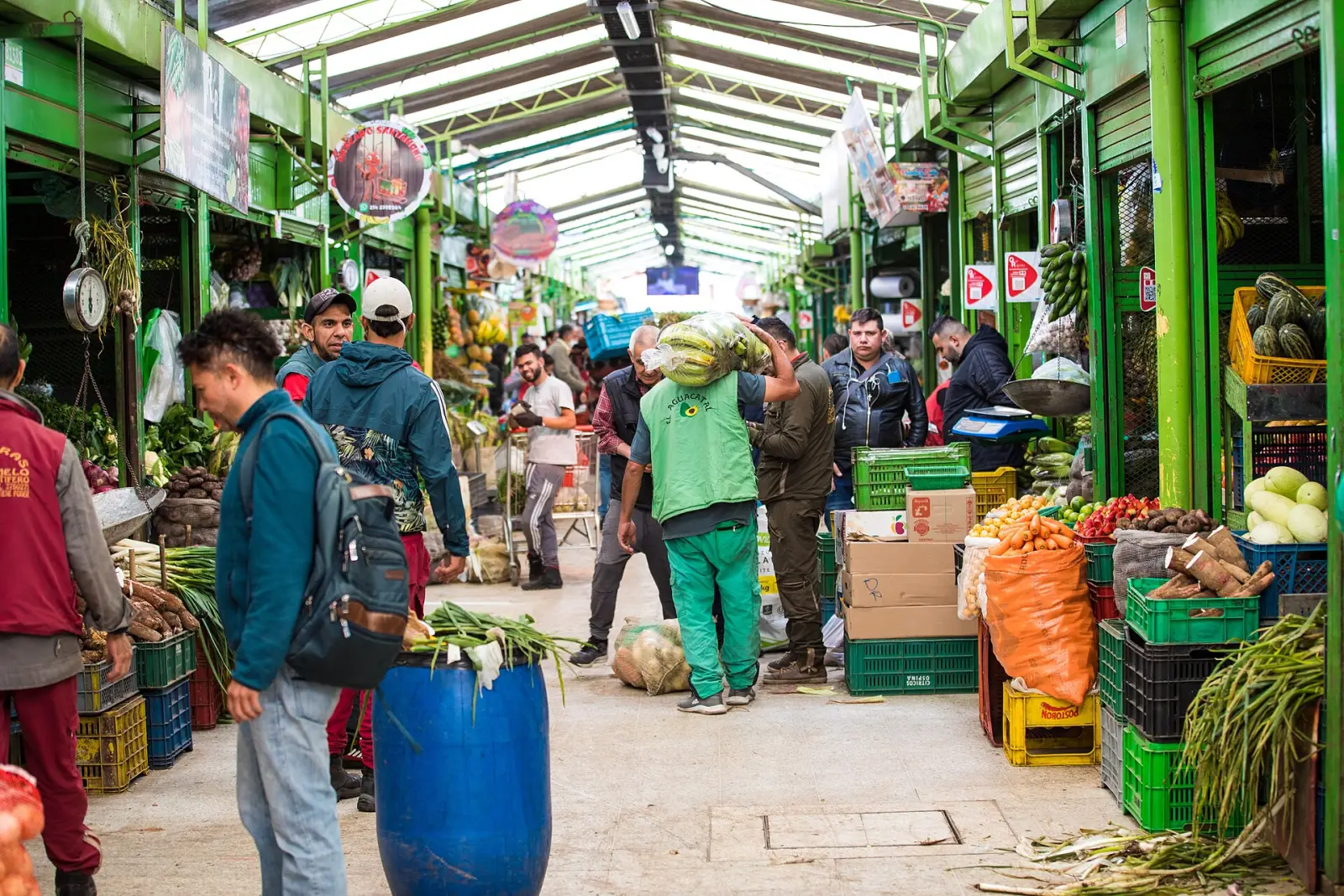
Markets, street food, buses, small towns, tips, and anything away from a mall or a chain.
Malls, chains, hotels, supermarkets and mid-range restaurants in Bogotá, Medellín and Cartagena.
A float in 10,000 and 20,000 peso notes. The 50s and 100s a machine gives you are hard to spend.
ATM fees and caps — around 25,000 pesos a withdrawal against a low limit is a punishing combination.
The money itself
- $2,000Grey-green
- $5,000Purple
- $10,000Red-orange
- $20,000Blue-grey
- $50,000Violet
- $100,000Yellow-brown
50, 100, 200, 500 and 1,000 pesos. The 1,000 coin does the work of a small note and is what a bus fare or a fruit stall wants, so it is worth keeping rather than emptying out of a pocket.
Everything is priced in thousands and locals often drop them — a taxi quoted at twenty means 20,000 pesos. Machines dispense 50,000 and 100,000 notes, which almost nothing small can change, so break them at a supermarket or a chain before you need small money.
Every way to pay, and whether it works for a visitor
Whether a payment method exists in Colombia and whether you can use it are different questions. This table answers the second one: no local bank account, no local SIM, no residency.
Cash (pesos)
WorksThe default for markets, street food, buses, small restaurants, small towns and tips. Small notes and 1,000 peso coins are the working money.
Visa / Mastercard
Works, with a catchReliable in malls, chains, hotels, supermarkets and mid-range restaurants in the main cities, contactless included. Outside those it thins out quickly, and a terminal may ask whether the card is credit or debit.
Apple Pay / Google Pay
Works, with a catchWorks at contactless terminals, which is a city phenomenon. It inherits your card, so it does not help where cards are not taken.
Nequi and Daviplata
Residents onlyThe wallets Colombians pay each other and small businesses with, tied to a Colombian account and identity document. You will see the QR codes everywhere and cannot use them.
Uber / DiDi / Cabify
WorksAll operate in the cities, take a foreign card in the app and quote the fare in advance. They are the recommended way to move after dark, and the reference price when a street taxi wants to negotiate.
Cash
Colombia divides cleanly: a mall, a chain restaurant, a hotel or a supermarket in Bogotá, Medellín or Cartagena takes cards without thought, and the market, the bus, the street arepa and the coffee farm do not.
The notes a machine gives you are the wrong ones. 50,000 and 100,000 peso notes cannot be changed by a fruit seller or a bus conductor, so break them early at a supermarket and keep 10s and 20s for the day, along with the 1,000 peso coins that fares and small purchases run on.
Withdraw thoughtfully: fees are high and caps are low, so a week of cash means several withdrawals unless you find a bank that allows more. Use machines inside branches or malls, during the day, and be discreet about what you are carrying afterwards.
Cards
Card acceptance in the cities is good and contactless is normal. A Colombian terminal will often ask whether the payment is crédito or débito and sometimes how many instalments — answer credit and one, and a foreign card processes normally.
Where cards are not taken, it is usually because the business is small rather than because it prefers cash, and there is rarely a surcharge for using one.
Decline dynamic currency conversion at terminals and machines. The peso moves enough that a home-currency quote looks reassuring, and it is still several percent worse than paying in pesos.
ATMs
This is the expensive part of Colombia. Most banks charge in the region of twenty to thirty thousand pesos per foreign-card withdrawal, and many cap a single transaction low enough that the fee is a real percentage of what you take out.
The lever is the cap rather than the fee: banks differ, and finding one that allows a larger single withdrawal is worth a short walk. Some machines let you increase the limit within the transaction, which is worth reading the screen for.
Use machines inside bank branches, malls or supermarkets in daylight. Free-standing machines on the street are both the most expensive and the least sensible option after dark.
Changing money
Casas de cambio in the malls and city centres give competitive rates for dollars and euros and are straightforward — you will need your passport, and the transaction is recorded.
For most visitors, a bank ATM is still simpler despite the fee. Compare on the total cost rather than the window rate.
Pesos are worth spending down before you leave; they change back poorly abroad. Airport counters price accordingly, so aim to finish close to zero.
Costs that are not the price
The tip is capped and must be offered, not assumed
Colombian law caps the suggested restaurant tip at 10% and requires the staff to ask — ¿desea incluir el servicio? — before adding it to the bill. Yes, no, more or less are all acceptable answers and none of them need justifying. If a 10% line appears without anyone asking, you are entitled to have it removed.
Foreign visitors do not pay the 19% tax on hotel rooms
Non-resident visitors on a tourist entry are exempt from IVA on accommodation, applied against your passport at check-in. Roughly half of hotels do this automatically and the rest need reminding, so raise it when booking and check the folio at checkout.
IVA is inside other prices
Away from accommodation, the 19% tax is included in what is displayed, so a menu or shelf price is what you pay.
Discretion is part of the budget
The local advice — no dar papaya, roughly do not hand someone the opportunity — applies to money more than anything. Withdraw in daylight inside a building, do not count cash in the street, use ride apps after dark, and keep the day's spending money separate from the rest.
Paying for transport
Bogotá and Medellín run on their own cards
TransMilenio in Bogotá uses the Tullave card and Medellín's metro uses Cívica, both bought and topped up at stations with cash. Neither takes a bank card at the gate, and both are very cheap.
Ride apps after dark
Uber, DiDi and Cabify quote in advance, take a foreign card and remove the negotiation. In the cities they are the standard advice for travelling at night, and cheap enough that the alternative rarely makes sense.
Buses between cities
Long-distance coaches are comfortable and sold at terminals in cash or online by card; domestic flights are often cheaper than the mountain roads justify in time. Both are worth booking ahead around holidays.
What you may carry in and out
Declaring cash
More than USD 10,000 or the equivalent must be declared to customs on entry and exit.
Pesos do not travel
There is little market for Colombian pesos abroad. Spend down or change back before you fly rather than carrying a balance home.
Common questions about money in Colombia
Do I have to pay the tip in Colombia?
No, and the law is unusually clear about it: the suggested tip is capped at 10% and staff must ask whether you want it included before producing the final bill. Saying no, or asking for more or less, needs no explanation. A 10% line added without being offered can be removed.
Do tourists pay tax on hotels in Colombia?
No — foreign visitors on a tourist entry are exempt from the 19% IVA on accommodation, applied against your passport at check-in. About half of hotels do it without prompting and the rest need reminding, so mention it when booking and check the bill at checkout.
How much are ATM fees in Colombia?
Around 20,000–30,000 pesos per withdrawal at most banks, and the per-transaction cap is often only 300,000–600,000 pesos, which makes the fee a real percentage. Banks differ, so a machine allowing a larger withdrawal is worth finding, and some let you raise the limit within the transaction.
Do I need cash in Colombia?
Yes, outside the malls and chains. Markets, street food, buses, small restaurants and small towns are cash. Break the 50,000 and 100,000 notes a machine gives you at a supermarket — almost nothing small can change them.
Can tourists use Nequi or Daviplata?
No. Both need a Colombian bank account and identity document. They are how Colombians pay each other and many small businesses, which is why cash still matters for a visitor.
Is it safe to use ATMs in Colombia?
With ordinary care. Use machines inside bank branches, malls or supermarkets during the day, avoid free-standing street machines after dark, do not count money in the street, and keep the day's spending separate from the rest. Ride apps rather than street taxis at night is the other standard precaution.
Why did the taxi driver say twenty when the fare was twenty thousand?
Because Colombians routinely drop the thousands when quoting prices. Twenty means 20,000 pesos. It is shorthand rather than an attempt to confuse, and it applies to market prices and taxi fares alike.
Where these figures come from
Checked against the following on . Fees and thresholds move; where a figure varies by bank or by machine, this page gives the range rather than inventing a single number.