Travel money
Travel money in Japan: cash or card?
Put Suica in your phone on the plane and most of Japan is solved — trains, konbini, vending machines. Keep real cash for the small restaurants and shrines that still take nothing else.
Japanese yen (JPY, ¥) · figures checked against the sources at the foot of this page
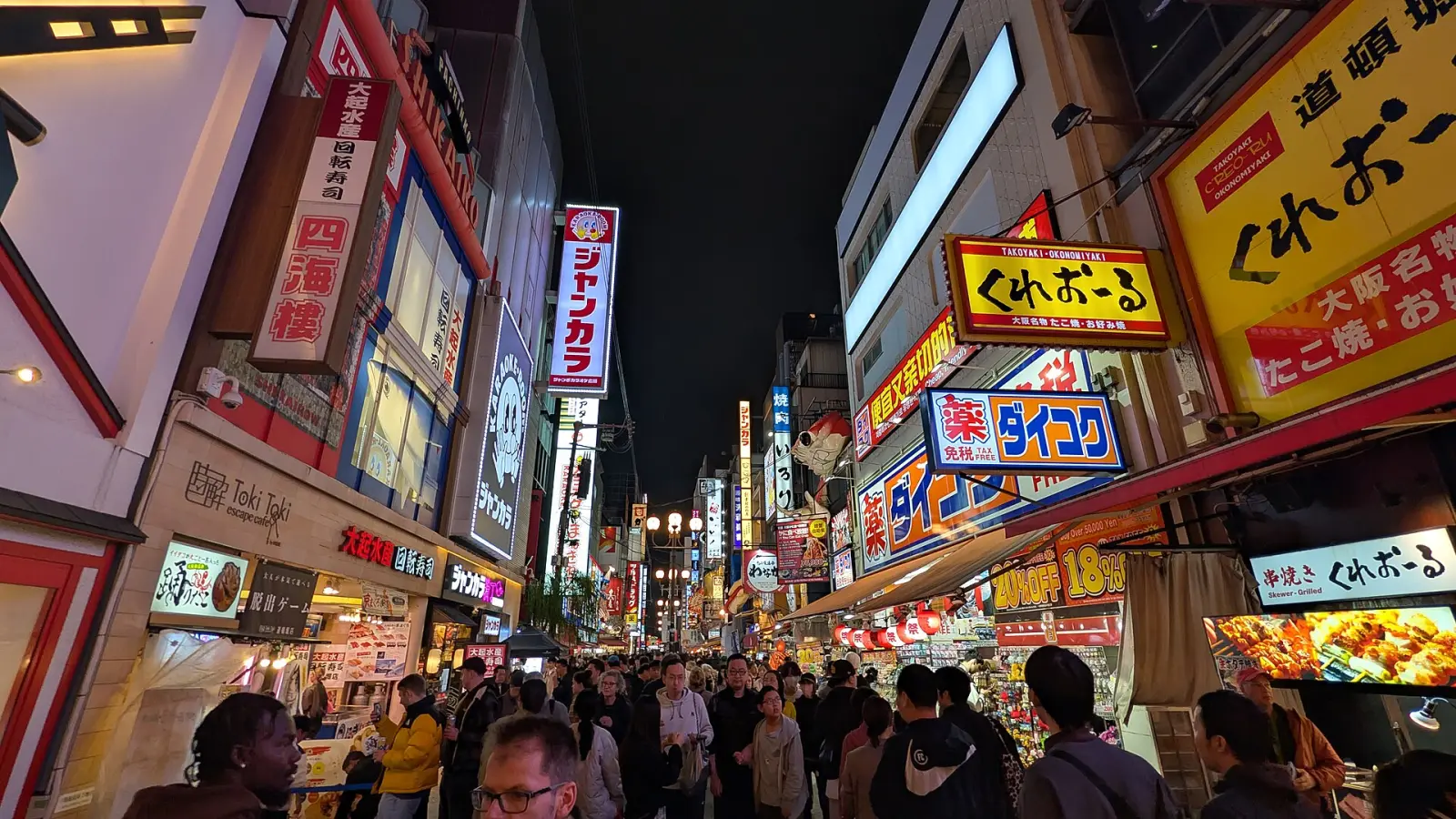
Small restaurants, izakaya, shrines and temples, markets, festivals, rural towns and older ticket machines.
Department stores, chains, hotels, supermarkets, konbini and anywhere with a printed English menu.
¥5,000–10,000 in notes and the coins that come back — plus Suica in your phone for everything small.
Assuming a card will work at dinner. A good restaurant with no card terminal is completely normal here.
The money itself
- ¥1,000Blue
- ¥5,000Purple
- ¥10,000Brown
1, 5, 10, 50, 100 and 500 yen, and you will hold all of them. Japan runs on coins in a way most card-first visitors have forgotten — the 500 is worth keeping, the 1 and 5 accumulate. A coin purse is not an affectation here.
Cash is handled with two hands and a tray: put notes on the small tray by the till rather than into the cashier's hand, and expect your change counted back the same way. Nothing bad happens if you forget, but the tray is there for a reason.
Every way to pay, and whether it works for a visitor
Whether a payment method exists in Japan and whether you can use it are different questions. This table answers the second one: no local bank account, no local SIM, no residency.
Suica or Pasmo in your phone
WorksThe IC card that pays for trains, buses, konbini, vending machines and a great many small shops. An iPhone can add one in Wallet before you land, with no deposit and no queue; top it up with a foreign card in the app, or with cash at any convenience store when a card is declined. Android phones bought outside Japan generally cannot hold one.
Cash (yen)
WorksNever refused, and still the only thing that works at a lot of very good restaurants, at shrines and temples, at markets and festivals, and in small towns. This is not nostalgia — it is a live constraint on where you can eat.
Visa / Mastercard
WorksFine in department stores, hotels, chains, supermarkets and konbini, contactless included. The gap is at the bottom of the market rather than the top: the smaller and more owner-run the place, the likelier it is cash or IC card only.
Apple Pay / Google Pay
WorksWorks wherever the card does, and on an iPhone it is also how Suica lives — which is the more useful half. Expect the terminal to ask which payment you mean; the word for the IC card is the card's own name.
PayPay and the QR wallets
Residents onlyThe QR codes on every counter belong to PayPay, Rakuten Pay and their rivals, and they want a Japanese phone number and bank account. Cash or Suica covers the same shops.
American Express
Works, with a catchBetter than you might expect — department stores, hotels and chains — but not at the small end. A Visa or Mastercard is still the card to carry.
Cash
Japan is a modern card country with an unusually deep cash floor, and the floor is where the good food is. A ramen counter with a ticket machine, an izakaya down a staircase, a temple's incense stand, a matsuri stall — none of these owe you a card terminal, and plenty simply do not have one.
The practical rule is to carry more cash than a European city would need, in notes small enough to hand over: ¥1,000 notes and coins do most of the work, and a ¥10,000 note breaks without comment at a konbini. Coins matter here in a way they no longer do elsewhere, and a coin purse saves you from a pocket full of ¥1 pieces.
Withdraw at a convenience store rather than a bank. Seven Bank machines inside 7-Eleven and the ATMs in Japan Post branches take foreign cards around the clock; most other Japanese bank machines will simply refuse yours.
Cards
Card acceptance is broad at the formal end and thin below it. Department stores, hotel chains, supermarkets, convenience stores and anything aimed at visitors take Visa and Mastercard without hesitation, and contactless is normal.
What catches people is the assumption that a card works at dinner. Restaurants in Japan are frequently small owner-run businesses, and a cash-only sign in the window is not a sign of a bad restaurant — it is often the opposite. Check before you sit down if cash is going to be a problem.
Decline the offer to be billed in your own currency at a terminal or a machine. Paying in yen and letting your own bank convert is always the better rate.
ATMs
Only some Japanese ATMs take foreign cards at all. The reliable two are Seven Bank, in every 7-Eleven, and Japan Post Bank, in post offices and their own lobbies — both work with Visa, Mastercard and the rest, both have English on screen, and both charge a small fixed fee of roughly ¥110 to ¥220 depending on the machine and the hour.
A city-bank ATM belonging to MUFG, SMBC or Mizuho will often decline a foreign card without explanation. That is a network restriction rather than a fault with your card, and walking to the nearest konbini solves it.
Because the fee is small and fixed, there is no need to hoard cash — but there is a need to have some before a rural trip, where machines thin out and shops do not take cards.
Changing money
Exchange counters at the airports are convenient and priced accordingly. A Seven Bank withdrawal beats them for most people, and there is one in the arrivals hall of every major airport as well as on the way into town.
If you are bringing cash, bring clean notes — Japan handles money carefully and a torn or marked foreign note invites a conversation you do not want at a counter.
Yen is easy to hold onto for a return trip and easy to change back at home, so there is no urgency about spending down to the last coin. The ¥1 and ¥5 pieces are the exception: nobody outside Japan will take those.
Costs that are not the price
Do not tip
Tipping is not part of the culture and a tip left on a table will often be chased down the street and returned. Service is included, staff are paid properly, and the gesture reads as confusing rather than generous. The exception is a ryokan, where a small amount in an envelope is a tradition of its own.
Consumption tax and the price you see
Consumption tax is 10%, and 8% on food and drink bought to take away — which is why a konbini asks whether you are eating in. Prices are generally displayed tax-included, so the shelf price is what you pay.
Tax-free shopping changes on 1 November 2026
Until then, tax-free shops deduct the tax at the till. From 1 November 2026 you pay the tax-inclusive price everywhere, then claim the refund when you leave the country — the same shape as Europe. If you are shopping in Japan around that date, the two systems behave completely differently.
Cover charges at izakaya
Many izakaya add otoshi — a small dish you did not order, charged a few hundred yen per person, in place of a cover charge. It is normal, it is not a scam, and it is rarely explained.
Paying for transport
The IC card is the ticket
Suica, Pasmo, ICOCA and their regional cousins are interchangeable across almost the whole country: tap in and out on trains, tap on buses, and use the same balance in konbini. For a visitor with an iPhone, adding one in Wallet before landing is the single most useful preparation available.
Shinkansen is booked separately
Bullet-train tickets are bought with a card online, at a machine or at a counter, and reserved seats cost little more than unreserved ones in practice. A Japan Rail Pass only pays off on a specific kind of itinerary — do the arithmetic against actual fares rather than assuming.
Taxis take cards, buses want exact change
City taxis accept cards and IC cards. Rural buses often take cash with a change machine on board that breaks ¥1,000 notes and nothing larger.
What you may carry in and out
Declaring cash
More than ¥1,000,000 or the equivalent in cash, cheques or precious metals has to be declared to customs on the way in and on the way out.
No cash payment cap
Japan sets no ceiling on paying in cash, which is consistent with a country where a serious restaurant bill is routinely settled in notes.
Common questions about money in Japan
Do I still need cash in Japan?
Yes, more than in most modern countries. Cards work in department stores, hotels, chains and convenience stores, but small restaurants, izakaya, shrines, markets and rural businesses are frequently cash-only. Carry ¥5,000–10,000 and treat a cash-only sign as normal rather than as a warning.
Can tourists use Suica on an iPhone?
Yes, and it is the best thing you can do before landing. Add Suica in Apple Wallet — no deposit, no queue — and use it for trains, buses, convenience stores and vending machines. Top up with a card in the app, or with cash at any konbini if a foreign card is declined. Android phones bought outside Japan generally cannot add one.
Which ATMs in Japan take foreign cards?
Seven Bank machines inside 7-Eleven and the ATMs at Japan Post are the dependable pair, both open long hours with English menus and a fee of about ¥110–220. Ordinary city-bank ATMs frequently decline foreign cards outright, which is a network restriction rather than a problem with your card.
Should I tip in Japan?
No. Tipping is not customary and a tip left behind is often returned to you. Service is included and staff are paid properly. The one traditional exception is a small amount in an envelope at a ryokan.
Is tax-free shopping in Japan changing?
Yes, on 1 November 2026. Until then eligible purchases are deducted at the till. After that you pay the tax-inclusive price and claim a refund when leaving the country, which means keeping paperwork and allowing time at the airport.
Can I pay by card in Japanese restaurants?
In hotel restaurants, chains and anywhere aimed at visitors, yes. In small owner-run places — which is much of the best food in the country — often not. Check the door or the menu before sitting down if you have no cash.
What is the otoshi charge on my izakaya bill?
A small dish brought without being ordered, charged a few hundred yen per person, standing in for a cover charge. It is standard practice at izakaya and is rarely mentioned in advance.
Where these figures come from
Checked against the following on . Fees and thresholds move; where a figure varies by bank or by machine, this page gives the range rather than inventing a single number.