Travel money
Travel money in Mexico: cash or card?
The price you read is the price you pay — tax is inside it by law. What sits outside it is the tipping, which reaches further than most countries: the petrol attendant, the supermarket bagger and the parking attendant are all working for it.
Mexican peso (MXN, $) · figures checked against the sources at the foot of this page
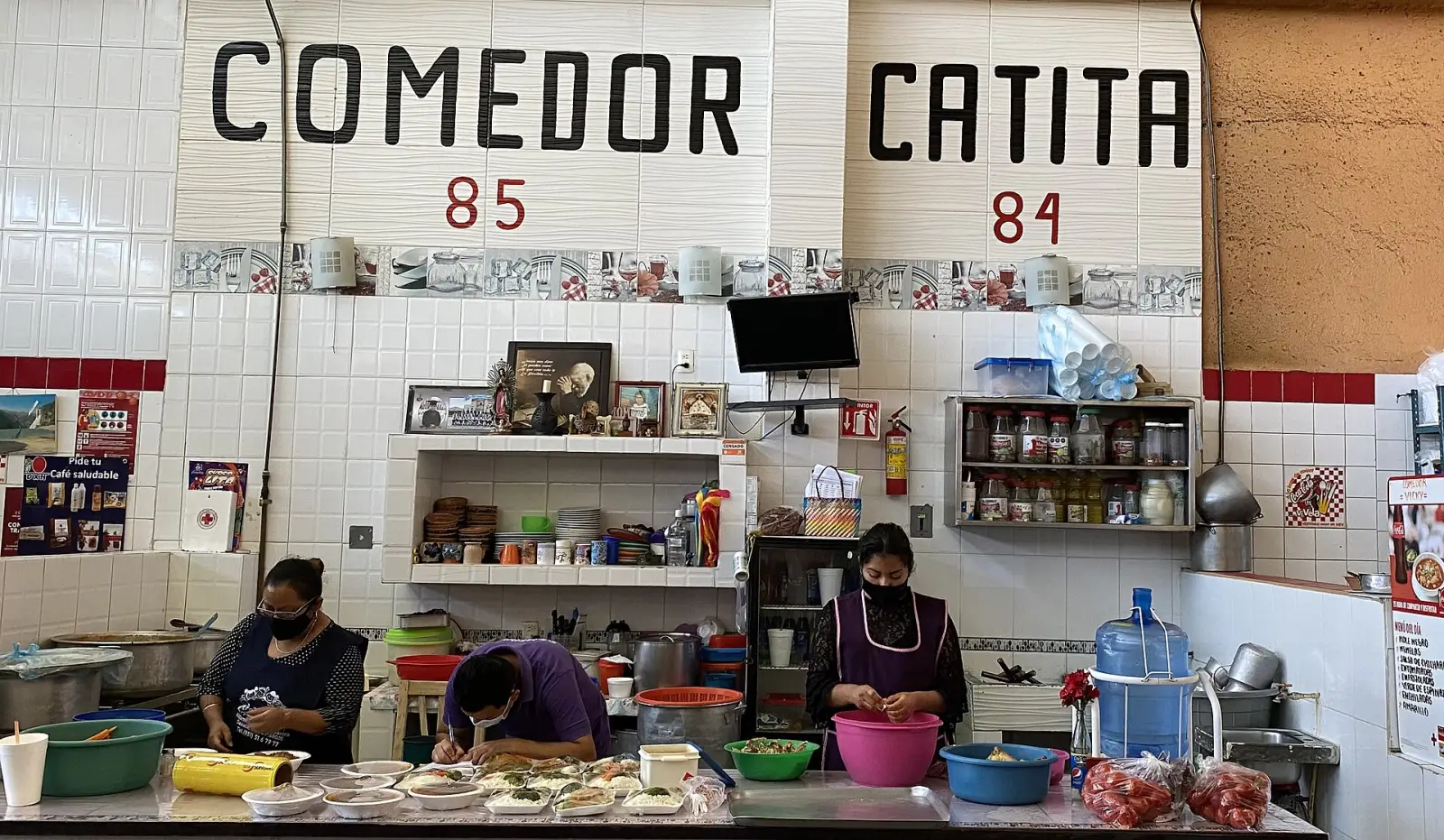
Markets, street food, taxis, small towns, tips, and the many small services that expect them.
Hotels, restaurants, supermarkets, chains and most businesses in the cities and tourist areas.
A float of 20, 50 and 100 peso notes and coins. Small denominations are what tipping runs on.
The machine, not the merchant: a fee per withdrawal, an aggressive conversion offer, and skimming in tourist zones.
The money itself
- $20Blue-green
- $50Purple-pink
- $100Red
- $200Green
- $500Blue
- $1,000Grey-violet
50 centavos, then 1, 2, 5 and 10 pesos. They are the tipping currency — the parking attendant, the bagger, the washroom, the man who watches your car all take coins, and running out of them is the most common small failure of a day here.
The 500 and 1,000 peso notes come out of machines and are difficult almost everywhere else: a taquería, a taxi or a market stall genuinely cannot change one. Break them at a supermarket or a chain, and keep 20s and 50s for the constant small payments.
Every way to pay, and whether it works for a visitor
Whether a payment method exists in Mexico and whether you can use it are different questions. This table answers the second one: no local bank account, no local SIM, no residency.
Visa / Mastercard
WorksAccepted broadly in cities and tourist areas — hotels, restaurants, supermarkets, chains, pharmacies, petrol stations — with contactless standard. Markets, street food and small towns are cash.
Cash (pesos)
WorksRequired for markets, street food, taxis flagged in the street, small towns and every tip. Small notes and coins matter more than the total.
Apple Pay / Google Pay
WorksWorks at any contactless terminal, which is most of them in the cities. It inherits the card, so it is no use where cards are not taken.
US dollars
Works, with a catchAccepted in border towns and resorts at a rate the business sets, and change comes back in pesos. Mexican rules also restrict how much cash in dollars a business may take. Convert and pay in pesos.
CoDi and the Mexican bank apps
Residents onlyThe domestic QR and transfer system, tied to a Mexican account. Nothing a visitor needs depends on it.
Uber / DiDi
WorksBoth cover the cities, take a foreign card in the app and quote the fare in advance — which is also the reference price when a street taxi wants to negotiate.
Cash
Mexico is card-friendly where the formal economy is and cash-only where it is not, and the split is sharp: a supermarket, a chain restaurant or a hotel takes cards without thought, while the market, the taquería, the collectivo and the man selling fruit at the roadside do not.
The bigger reason to carry cash is tipping, which reaches into more jobs here than most visitors expect and is often the whole of the wage. Petrol stations are attended and the attendant is tipped; supermarket baggers, frequently elderly, are paid only in tips; parking attendants who watch or wash your car expect coins.
That makes denominations the thing to manage. Keep 20s and 50s and a pocket of coins, and break the 500s a machine gives you at a supermarket rather than trying to at a food stall.
Cards
Acceptance in the cities and resorts is broad and contactless is normal. Chip and PIN is standard, terminals usually come to the table, and card fees at the merchant end are rare.
Two risks are worth naming. Dynamic currency conversion is pushed hard in tourist areas: a terminal offering to bill you in dollars is using its own rate, several percent worse than your card network's, and declining it does not cancel the transaction. And card skimming is a real problem — prefer terminals that come to you, and check machines before inserting a card.
Where a business asks whether you want to pay in pesos or dollars, the answer is always pesos.
ATMs
Use bank machines — BBVA, Santander, Banorte, Scotiabank, HSBC, Citibanamex — inside a branch or a shopping centre where you can. They charge a disclosed fee of roughly 30 to 65 pesos and give a fair rate if you decline the conversion offer.
Avoid the standalone machines in tourist strips, hotel lobbies and convenience stores. They charge more, push conversion harder, and are where skimming devices are most often found. Check the card slot for anything protruding or loose before you use any machine.
Every machine here will offer to convert your withdrawal into your home currency. Decline it every time — the transaction still completes, in pesos, at a better rate.
Changing money
Casas de cambio in the cities and airports are competitive and quick, and generally better than a hotel desk. Bring dollars in clean notes if you are changing cash — they are the currency the market is built around.
For most visitors an ATM is simpler and the rate is better, provided the conversion offer is declined. Compare the whole cost — fee plus rate — rather than the headline number in a window.
Pesos are easy enough to change back, but the spread is real, so aim to finish close to zero rather than converting a large balance twice.
Costs that are not the price
IVA is already in the price
Mexican law requires the displayed price to include the 16% tax, so a menu price or a shelf price is what you actually pay. This is the opposite of the United States and it is worth knowing before you assume a total will grow at the till.
Tipping reaches further than you expect
10–15% in restaurants. A few pesos to the petrol attendant who filled the tank and cleaned the windscreen. Five to ten pesos to the supermarket bagger, who is often elderly and paid only in tips. Coins to the parking attendant who watched or washed the car. A day rate for guides. Cash, in pesos, is the way all of it is done.
Nobody pumps their own petrol
Every station is attended. The attendant fills the tank and often cleans the windscreen; a small tip is customary. Check that the pump reads zero before they start — it is the standard precaution here and asking for it is normal.
Airport taxis are bought at a booth
At most airports you buy an authorised taxi ticket at a counter inside before going out to the rank, at a fixed price by zone. It costs more than a rideshare but removes the negotiation, and it is the safer default late at night.
Paying for transport
Mexico City runs on its own card
The Metro, Metrobús and Ecobici take the city's integrated card, bought and topped up at station machines with cash and increasingly with a bank card. Fares are very low; the card is the only friction.
Long-distance buses are excellent and card-friendly
ADO, ETN and Primera Plus sell online by card and are the comfortable way to move between cities. Buying at the terminal is straightforward too, in cash or by card.
Taxis, apps and colectivos
Uber and DiDi quote in advance and take a card. Street taxis are cash and a price agreed first outside the cities. Colectivos and combis — shared vans on fixed routes — are cash, small change, and the cheapest way to move locally.
What you may carry in and out
Declaring cash
More than the equivalent of USD 10,000 in cash or instruments must be declared on entry and exit. Undeclared amounts above that are seized rather than fined.
Limits on paying in dollars
Mexican anti-money-laundering rules cap how much cash in US dollars a business may accept, which is part of why prices quoted in dollars come with an unfavourable rate attached. Paying in pesos avoids the whole question.
Common questions about money in Mexico
Is tax included in prices in Mexico?
Yes. The 16% IVA must be included in the displayed price by law, so a menu or shelf price is the price you pay. Tips are the thing that sits outside it.
How much should I tip in Mexico?
10–15% in restaurants, a few pesos for the petrol attendant, 5–10 pesos for a supermarket bagger, coins for parking attendants, and a daily amount for guides. Several of those jobs are paid in tips alone, which is why coins and small notes matter more than the total you carry.
How much are ATM fees in Mexico?
Roughly 30–65 pesos per withdrawal at a bank machine, plus whatever your own bank charges, and more at standalone machines in tourist areas. Use machines inside bank branches or shopping centres, and always decline the offer to convert into your home currency — the transaction still goes through, in pesos, at a better rate.
Should I use dollars or pesos in Mexico?
Pesos. Border towns and resorts will take dollars at a rate they choose, with change in pesos, and Mexican rules limit how much cash in dollars a business may accept anyway. Paying in pesos is both cheaper and simpler.
Do I need cash in Mexico?
Yes. Cities and resorts take cards widely, but markets, street food, street taxis, colectivos, small towns and every tip are cash. Carry 20s, 50s and coins rather than the 500s a machine hands you.
Why does someone else pump my petrol?
Because every station in Mexico is attended — self-service does not exist. The attendant fills the tank and often cleans the windscreen, and a small tip is customary. Watch that the pump is reset to zero before they start; asking is entirely normal.
Is card skimming a risk in Mexico?
It is a real one, particularly at standalone machines in tourist areas. Use bank machines inside branches or malls, inspect the card slot before inserting anything, prefer terminals that come to your table, and check your statements while travelling rather than after.
Where these figures come from
Checked against the following on . Fees and thresholds move; where a figure varies by bank or by machine, this page gives the range rather than inventing a single number.