Travel money
Travel money in Egypt: cash or card?
Carry more small notes than feels reasonable: baksheesh is a constant, not an occasional gesture. Take pounds from a bank machine rather than a counter, and treat any price you read in an old guide as fiction — the pound has moved a long way.
Egyptian pound (EGP, E£) · figures checked against the sources at the foot of this page
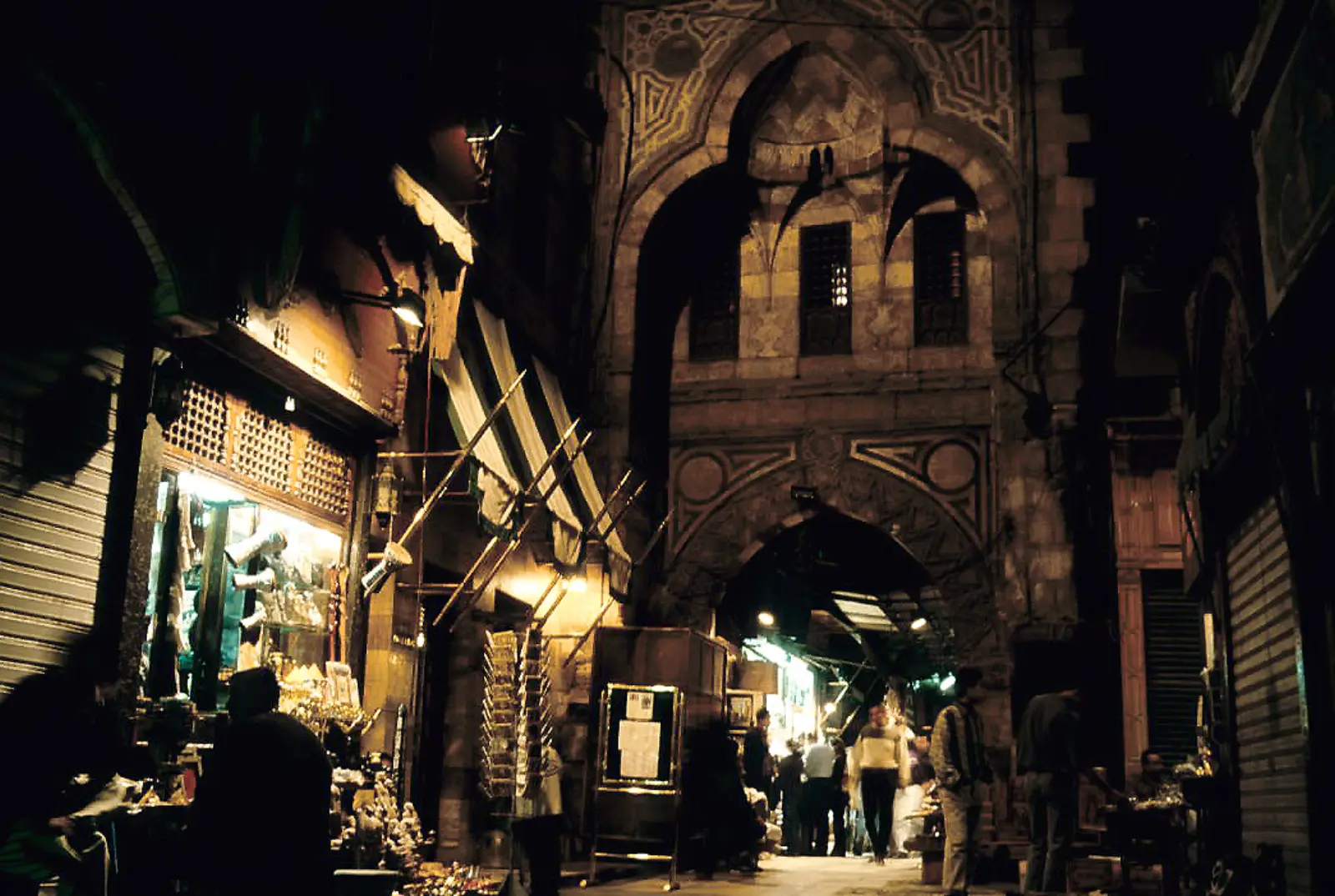
Baksheesh, taxis, markets, cafés, small restaurants, felucca rides, and most of everything outside a hotel.
Hotels, larger restaurants and supermarkets in Cairo and the resorts, and the ticket offices at the big sites.
A thick float of small notes. Denominations matter more here than the total.
Running out of small notes. A 200-pound note is useless for the ten tips you will give before lunch.
The money itself
- 5 E£Blue-grey
- 10 E£Red-brown
- 20 E£Green
- 50 E£Red
- 100 E£Blue
- 200 E£Olive
50 piastres and 1 pound, and they are close to worthless after years of devaluation — useful as tips for the smallest services and not much else. The 10 and 20 pound notes are what actually do that job now.
The 10 and 20 pound notes are the working currency of a trip here, and you will get through them faster than you expect. Ask for small denominations whenever you exchange or withdraw, and break the big notes at a supermarket rather than trying to at a kiosk — a 200 cannot be changed by a man handing you a paper towel.
Every way to pay, and whether it works for a visitor
Whether a payment method exists in Egypt and whether you can use it are different questions. This table answers the second one: no local bank account, no local SIM, no residency.
Cash (Egyptian pounds)
WorksThe default for nearly everything: taxis, markets, cafés, small restaurants, feluccas, drivers, and every one of the small payments that punctuate a day here. Small notes are the point.
Visa / Mastercard
Works, with a catchReliable at hotels, larger restaurants, supermarkets and shops in Cairo and the Red Sea resorts, and increasingly at the ticket offices of the major archaeological sites. Below that, assume cash.
Apple Pay / Google Pay
Works, with a catchWorks where a contactless terminal exists, which means hotels, chains and the newer parts of Cairo. Not a plan on its own.
US dollars and euros
Works, with a catchWidely recognised and sometimes requested, particularly by tour operators and for larger arrangements. The rate applied is the business's own, and small change comes back in pounds. Bring them to exchange rather than to spend.
Egyptian wallets and Instapay
Residents onlyThe domestic apps run on Egyptian bank accounts and numbers. Nothing a visitor needs depends on them.
Cash
Egypt runs on cash, and more precisely on small cash. Baksheesh — the small payment for a service rendered, asked for or not — is woven through the day: the man who opens a gate, the one who points at a tomb, the attendant at the washroom, the driver who waits. None of it is large; all of it is constant, and it needs 10s and 20s rather than a card.
Because of that, the useful measure is denominations rather than totals. Ask for small notes when you exchange or withdraw, break big ones in supermarkets, and keep a separate pocket of small notes so you are not opening a fat wallet in front of the person you are tipping.
Machines are the sensible way in. They dispense at a rate close to the interbank one, which beats a hotel desk comfortably, though the cap is often only three to five thousand pounds and a fee applies each time.
Cards
Card acceptance has improved and is now dependable at hotels, larger restaurants, supermarkets and the ticket offices at the big sites — a genuine change from a decade ago, and worth knowing before you draw a week of cash for entry fees.
Everywhere else, assume cash. Markets, taxis, cafés, small restaurants, feluccas and every informal service are cash-only in practice, whatever a terminal on the counter suggests.
Decline dynamic currency conversion at terminals and machines. Being billed in your own currency hands the rate to the operator and costs several percent on top of everything else.
ATMs
Bank machines give the fairest rate available to a visitor, which is the main argument for using them over any counter. The fee is modest by regional standards, but the per-transaction cap is low, so a week's cash means several withdrawals.
Availability is the real constraint. Machines in Cairo, Luxor and the resorts are plentiful; machines in smaller towns and at the edges of the tourist circuit can be empty, offline or out of notes entirely, especially around holidays. Withdraw before you need to rather than when you do.
Take pounds, decline conversion, and ask the machine for smaller denominations where it offers the choice — a stack of 200s is the wrong money for this country.
Changing money
Change at banks or licensed bureaux. Since the pound was floated and devalued sharply, the gap that once made informal exchange lucrative has largely closed, and the risk of an unlicensed changer is no longer offset by a better rate.
Bring dollars or euros in clean, recent notes if you are exchanging cash — older series and marked notes are refused or discounted, and large denominations get better rates than small ones.
Do not over-convert. Only a small amount of Egyptian currency may legally leave the country, and the pound has been losing value steadily, so holding a large balance for a fortnight costs you twice.
Costs that are not the price
Baksheesh is a running cost, not a tip
Budget for it as a line rather than a gesture: a few pounds for a washroom attendant or someone who carries a bag, 10–20 for a small service, more for a driver or a guide at the end of a day. It is a wage supplement in a low-wage economy and refusing every request is neither realistic nor kind — but a firm, friendly no is entirely acceptable where nothing was actually done for you.
Service charge and tax on formal bills
Hotels and larger restaurants add a service charge and taxes on top of the listed price, which together are a substantial addition. Where they appear, extra tipping is optional rather than expected.
Site entry is priced separately for foreigners
The pyramids, Karnak, the Valley of the Kings and the rest publish a foreign-visitor price well above the Egyptian one, and photography permits are sometimes charged on top. It is official and posted at the gate, and it is the largest predictable cost of a sightseeing trip here.
Agree prices before, not after
Taxis without meters, felucca captains, camel and horse rides, and unofficial guides all price after the fact unless you fix the number first. Doing so is normal practice rather than distrust, and it removes the single most common argument travellers have here.
Paying for transport
Cairo's metro is cash and cheap
Tickets are bought at the station window, and the fare is small enough that the notes in your pocket cover a week of travel. Women-only carriages exist and are marked on the platform.
Trains and internal flights
Sleeper trains to Luxor and Aswan and domestic flights are booked online by card and are the calm way to move. Ordinary intercity trains are bought at the station, in cash, with foreigner pricing on some services.
Taxis, apps and feluccas
Uber and Careem work in Cairo and Alexandria and take a card in the app, which removes the negotiation entirely. Street taxis are cash and a price agreed first; a felucca is always a negotiation, always cash, and always worth agreeing per hour rather than per trip.
What you may carry in and out
Pounds cannot leave with you
Only a small amount of Egyptian currency — on the order of a few thousand pounds — may be taken out of the country. Spend down or convert back before departure.
Declaring foreign cash
Foreign currency above the equivalent of USD 10,000 must be declared to customs on arrival, and declaring it is what permits taking it out again.
Common questions about money in Egypt
How much cash should I carry in Egypt?
More than you would elsewhere, and in small notes. Baksheesh is constant — small payments for small services all day — and 10 and 20 pound notes are the working currency. Ask for small denominations when you withdraw or exchange, and keep them separate from your main wallet.
What is baksheesh and do I have to pay it?
A small payment for a service rendered, and it is a normal part of daily economic life rather than a scam. Budget for it: a few pounds for a washroom attendant, 10–20 for a small service, more for a driver or guide over a day. Where nothing was actually done for you, a friendly no is perfectly acceptable.
Should I bring US dollars to Egypt?
Bring some in clean, recent notes to exchange — but not to spend. Businesses that accept dollars set their own rate and give change in pounds. Since the pound was floated the informal market's advantage has largely gone, so a bank, a licensed bureau or an ATM is both safer and competitive.
Can I pay by card in Egypt?
At hotels, larger restaurants, supermarkets and increasingly at the ticket offices of the major sites, yes. Markets, taxis, cafés, feluccas and every informal service are cash. Assume cash unless you can see the terminal.
Can I take Egyptian pounds out of the country?
Only a small amount — a few thousand pounds. Spend down or convert back before you leave, and remember foreign cash above the equivalent of USD 10,000 has to be declared on the way in.
Why do the pyramids cost me more than the person in front of me?
Egypt publishes separate foreign-visitor prices at its archaeological sites, well above the local rate, with photography permits sometimes charged on top. It is official policy posted at the gate, and it is usually the single biggest predictable cost of a sightseeing trip.
Are ATMs reliable in Egypt?
In Cairo, Luxor and the resorts, mostly yes, at a fee of roughly EGP 15–30 and a cap of about 3,000–5,000 per transaction. Outside those, machines can be empty, offline or absent — particularly around holidays — so withdraw before you leave a city rather than after.
Where these figures come from
Checked against the following on . Fees and thresholds move; where a figure varies by bank or by machine, this page gives the range rather than inventing a single number.