Travel money
Travel money in New Zealand: cash or card?
Tap for everything and expect a surcharge on top of it — typically around 2%, still legal, and the ban promised for May 2026 never arrived. Carry a little cash for rural New Zealand and nothing else.
New Zealand dollar (NZD, NZ$) · figures checked against the sources at the foot of this page
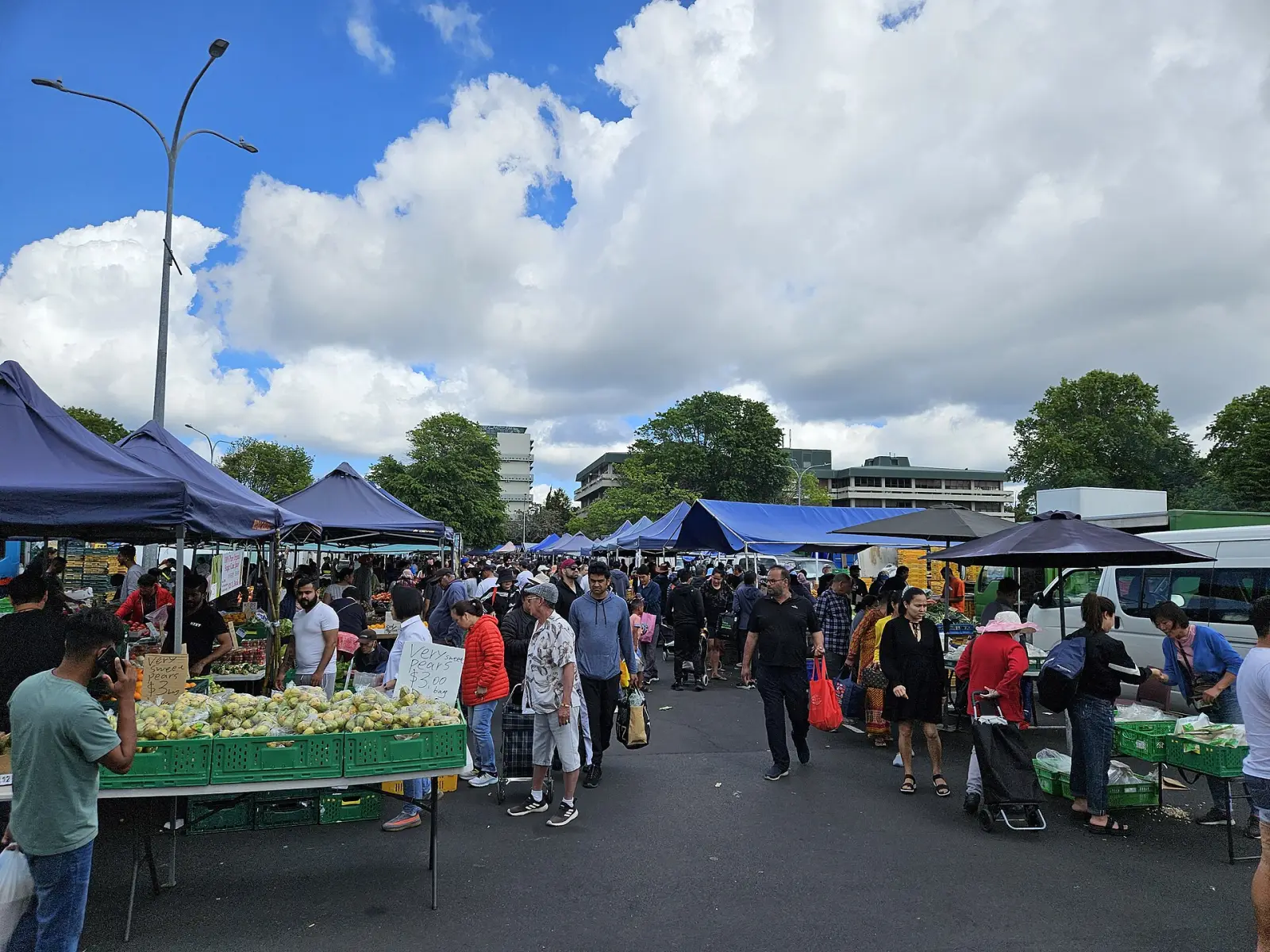
Weekend markets, small-town cafés, rural petrol stations, honesty boxes, some backcountry huts and campsites.
Everything else — cities, chains, hotels, supermarkets, fuel, buses in three cities, down to a single coffee.
NZ$100–200 in notes for markets and small towns, and a card for the rest.
The surcharge added at the till. Around 2% is normal, more is common, and no law currently stops it.
The money itself
- 5 NZ$Orange
- 10 NZ$Blue
- 20 NZ$Green
- 50 NZ$Purple
- 100 NZ$Red
10, 20 and 50 cents, then $1 and $2 — and that is the lot. The 1 and 2 cent coins went in 1990 and the 5 cent in 2006, so there is nothing smaller than a 10. The $2 is larger than the $1 here, which is the opposite of Australia.
Notes have been polymer since 1999 and get slightly longer as they get more valuable, from the $5 up to the $100, so they are easy to sort by feel in a wallet. Because the smallest coin is 10 cents, a cash total is rounded to the nearest 10 cents at the till while the identical purchase on a card is charged to the cent — usually a few cents either way, and not something to argue about.
Every way to pay, and whether it works for a visitor
Whether a payment method exists in New Zealand and whether you can use it are different questions. This table answers the second one: no local bank account, no local SIM, no residency.
Visa / Mastercard
WorksAccepted essentially everywhere, contactless included, for any amount. Acceptance is not the question here; what gets added on top is. Foreign-issued cards cost merchants more to accept than local ones, so where a business surcharges by card type, yours is likely to be at the higher end.
Commonly around 2%, sometimes far more — read the sign by the terminal
Apple Pay / Google Pay
WorksWorks anywhere contactless does, which is nearly everywhere, including transit readers in Auckland, Wellington and Christchurch. Note that a phone wallet is not a way around a surcharge — it is the same card underneath and is surcharged the same way, often more, because it is contactless.
Cash (New Zealand dollars)
WorksAlways accepted and never surcharged, which occasionally makes it the cheaper way to pay a bill. It is what still runs weekend markets, roadside fruit stalls, honesty boxes and some small-town businesses, and machines to get it have become noticeably scarcer.
EFTPOS
Residents onlyNew Zealand's own domestic debit network, and the reason terminals still ask you to choose CHQ, SAV or CR. It runs on cards issued by New Zealand banks; a foreign card cannot use it. If a terminal offers you the choice, take credit — that is the Visa or Mastercard rail your card actually lives on.
American Express
Works, with a catchTaken by hotels, chains and larger restaurants, refused by a good many independents, and where it is taken the surcharge is usually the highest on the sign. Carry a Visa or Mastercard as well.
UnionPay
Works, with a catchAccepted at major retailers, duty free and tourist-facing businesses, and at the larger banks' cash machines. Not something to rely on outside the cities.
Bank transfer and POLi
Residents onlyHow New Zealanders pay each other and many online bills, tied to a New Zealand bank account. Nothing a visitor needs to arrange runs on it.
Cash
New Zealand is a card country with cash-shaped edges. In Auckland, Wellington, Christchurch and Queenstown you can go a week without touching a note. Outside them, the edges show up quickly: weekend and farmers' markets, roadside produce stalls, honesty boxes at farm gates, some rural petrol stations and backcountry hut and campsite fees.
A hundred or two hundred dollars covers all of that for most trips. Small notes are more useful than large ones — a market stall handed a $100 note on a Saturday morning may genuinely not have change.
Cash is also the one way to pay that is never surcharged. On a large bill at a business charging 2% or more, asking whether they take cash is a reasonable question rather than a rude one.
Remember the rounding: with nothing smaller than a 10 cent coin in circulation, cash totals round to the nearest 10 cents while card totals do not.
Cards
Terminals are everywhere and quick, and contactless is the default. The thing to understand before you arrive is the surcharge: New Zealand businesses may add a fee for accepting a card, and a great many do — a sticker on the terminal or a line on the menu, commonly around 2% and sometimes very much higher.
This was supposed to have ended. In July 2025 the government announced that in-store surcharges would be banned by May 2026 at the latest, and the Retail Payment System (Ban on Merchant Surcharges) Amendment Bill passed its first reading. The deadline passed with the Bill stalled for want of support within the governing coalition, and as of August 2026 there is no new date. Surcharging remains legal. Australia's equivalent ban takes effect on 1 October 2026; New Zealand's has no effective date at all.
What does bind is the Commerce Commission's position that a surcharge should reflect what accepting the card actually costs the business, and that anything above about 2% is likely to be excessive. Interchange fees were capped from 1 December 2025 for New Zealand-issued cards and from 1 May 2026 for foreign-issued ones, which lowered the underlying cost — a surcharge well above 2% is now hard for a business to justify, and worth querying.
Two habits save the most money: look for the sign before you commit, and decline dynamic currency conversion. Being offered the bill in your own currency at the terminal costs several percent on top of any surcharge, every time.
ATMs
ASB, BNZ, Westpac and Kiwibank do not generally add an owner fee to a foreign card at their own machines. ANZ does — NZ$3 for anyone who is not an ANZ customer, foreign cards included. Machines in dairies, service stations and pubs are privately operated and charge the most.
Fees move and vary by machine, so read what the screen tells you before you confirm. If it offers to convert the amount to your home currency, decline — that is dynamic currency conversion and it is more expensive than any owner fee on the screen.
Machines have thinned out considerably as cash use has fallen. They cluster around bank branches, supermarkets and shopping centres in the towns, and can be genuinely absent on long rural stretches — the West Coast, the Catlins, the Far North. Take out what you need before leaving a town rather than assuming the next one has a machine.
Because you need so little cash, one withdrawal at a bank's own machine on arrival usually does a whole trip.
Changing money
There is little reason to bring foreign notes to change. Cards work everywhere, and a withdrawal from a bank's own machine beats an airport bureau on any amount worth carrying.
If you want notes in hand as you land, take them from a machine in the terminal rather than a counter. The bureaux at Auckland and Christchurch airports are convenient and priced accordingly.
The New Zealand dollar is freely traded and easy to change back, so leftover notes are not a problem to solve before departure — though with so little cash needed, most visitors do not have many.
Costs that are not the price
The card surcharge, and the ban that has not happened
Businesses may add a fee for accepting a card and many do, commonly around 2% and disclosed on a sticker by the terminal or a line on the menu. A ban on in-store surcharges was promised by May 2026; the Bill stalled in Parliament, the deadline passed, and as of August 2026 surcharging is still legal with no new date set. The Commerce Commission's guidance is that a surcharge should reflect the business's actual cost of acceptance and that more than about 2% is likely excessive.
GST is 15%, inside the price, and not refundable
Every displayed price includes the 15% GST — what is on the shelf label is what you pay. Unlike Australia, New Zealand has no tourist refund scheme: there is no refund desk at the airport and no form to fill in. Visitors pay GST exactly as residents do, and the only tax-free purchases are made in duty-free shops.
Tipping is not expected
Hospitality staff are paid a legal minimum wage rather than a tipped wage, so nothing is expected in cafés, bars, taxis or restaurants, and no one will chase you down the street. Rounding up or leaving something for genuinely exceptional service is a kindness, not an obligation. Terminals in tourist areas have started prompting for a tip; declining is normal.
Public holiday surcharges
Cafés and restaurants commonly add around 15% on public holidays, when staff must be paid at a higher rate. It is required to be disclosed, it is printed on the menu or a card on the table, and it has nothing to do with tipping or with the card surcharge — you can meet both on the same bill.
The visitor levy, paid before you travel
Most visitors pay the NZ$100 International Visitor Conservation and Tourism Levy at the same time as requesting an NZeTA or applying for a visa, not on arrival. Australian citizens and permanent residents are exempt, as are travellers from many Pacific Island countries and people transiting. It is charged per person regardless of age and is not refunded if the application is declined.
Paying for transport
Auckland: tap your own card
Buses, trains and most ferries take a contactless bank card or phone directly at the reader — tag on and tag off every time. There is a daily fare cap, but the seven-day cap and any concession fare still require an AT HOP card, and contactless is charged at the adult rate. Each traveller must tap their own card.
Wellington: contactless, with a fee
Metlink buses and trains have taken contactless Visa and Mastercard, physical or in a phone, since March 2026 — but with a 1.5% fee on each fare, and for single adult fares only. Day passes, 30-day passes, concessions and free transfers still need a Snapper card. The Airport Express and the harbour ferries run their own systems.
Christchurch: Motu Move is live
Greater Christchurch buses and ferries were the first on the national ticketing system, Motu Move, and take a contactless card or phone with no extra charge, with daily caps and free transfers applied automatically. A small pre-authorisation may appear on your statement before the real fare replaces it overnight.
Everywhere else, and the national rollout
Outside those three, regional networks are still on their own cards or cash, and Motu Move is being rolled out region by region into 2027 — Wellington is not expected until late 2027. Check the local operator before you arrive rather than assuming the reader takes a bank card.
Driving is how most visitors get around
Distances and thin rural bus networks mean a hire car for most itineraries. The few toll roads, all in the North Island, are billed electronically and a rental firm will pass them on with an administration fee, or you can pay online yourself within five days. Fuel is paid by card at the pump or inside; some rural stations are card-only and unattended overnight, which is the one place a card genuinely beats cash.
What you may carry in and out
Declaring cash
NZ$10,000 or the foreign equivalent — notes, coins, travellers cheques and similar — must be declared on a Border Cash Report when entering or leaving New Zealand. Carrying it is not illegal; failing to declare it can lead to prosecution. The report can be completed online within 72 hours of travel or on a paper form from a Customs officer.
Biosecurity fines cost more than any surcharge
Not a money rule, but the one that actually empties travellers' wallets: undeclared food, plant material, seeds, honey and used outdoor gear attract an instant fine. Declaring is free and takes a minute; the fine does not.
Common questions about money in New Zealand
Why was a surcharge added to my card payment in New Zealand?
Because businesses are still allowed to pass on the cost of accepting cards. It is commonly around 2%, disclosed on a sticker by the terminal or a note on the menu, and contactless and phone wallets are surcharged the same way. A ban was promised by May 2026, but the Bill stalled in Parliament and, as of August 2026, surcharging remains legal with no new date.
Can I claim GST back when leaving New Zealand?
No. New Zealand has no tourist refund scheme — no refund desk at the airport, no forms, no exceptions. The 15% GST is inside every displayed price and visitors pay it exactly as residents do. This catches people arriving from Australia, which does refund GST on the way out.
Do I need cash in New Zealand?
A little. Cards cover the cities completely, but weekend markets, roadside stalls, honesty boxes, some rural petrol stations and backcountry hut fees still want notes. NZ$100–200 in small notes is enough for most trips, and cash is the one way to pay that is never surcharged.
Should I tip in New Zealand?
No. Staff are paid a proper minimum wage rather than a tipped wage, so nothing is expected in restaurants, cafés, bars or taxis. Some terminals in tourist areas now prompt for a tip; declining is entirely normal.
Can I tap my bank card on buses in Auckland or Wellington?
Yes in both, with conditions. Auckland takes contactless on buses, trains and most ferries at the adult fare, with a daily cap — the seven-day cap and concessions need an AT HOP card. Wellington has taken contactless since March 2026 but adds a 1.5% fee and covers single adult fares only, so passes and transfers still need Snapper. Christchurch's Motu Move takes contactless with no extra charge.
What are ATM fees in New Zealand?
Usually nothing at ASB, BNZ, Westpac or Kiwibank machines; ANZ charges NZ$3 to non-customers, foreign cards included. Independent machines in dairies, pubs and service stations charge more. Fees change, so read the screen before confirming — and always decline the offer to convert to your own currency, which costs far more than the fee.
Why can't I use EFTPOS with my overseas card?
Because EFTPOS is New Zealand's own domestic debit network and runs only on cards issued by New Zealand banks. It is why terminals still ask for CHQ, SAV or CR. With a foreign card, choose credit — that is the Visa or Mastercard network your card actually uses, and it works fine.
Where these figures come from
Checked against the following on . Fees and thresholds move; where a figure varies by bank or by machine, this page gives the range rather than inventing a single number.
- Commerce Commission — interchange fee regulation and the caps on foreign-issued cards
- Consumer NZ — surcharging, typical levels and what counts as excessive
- New Zealand Customs Service — Border Cash Report
- Immigration New Zealand — paying the International Visitor Levy
- Auckland Transport — using contactless payments on Auckland public transport
- Metlink — contactless card payment on Wellington buses and trains
- Metro Christchurch — Motu Move contactless fares
- ANZ New Zealand — the $3 ATM owner fee charged to overseas cards
- Newswire — New Zealand's surcharge ban stalls as Australia's takes effect
- Banknotes of the New Zealand dollar — denominations, colours and sizes
- Coins of the New Zealand dollar — withdrawal of the 1c, 2c and 5c and cash rounding